Recycling demolition waste: a 2026 guide
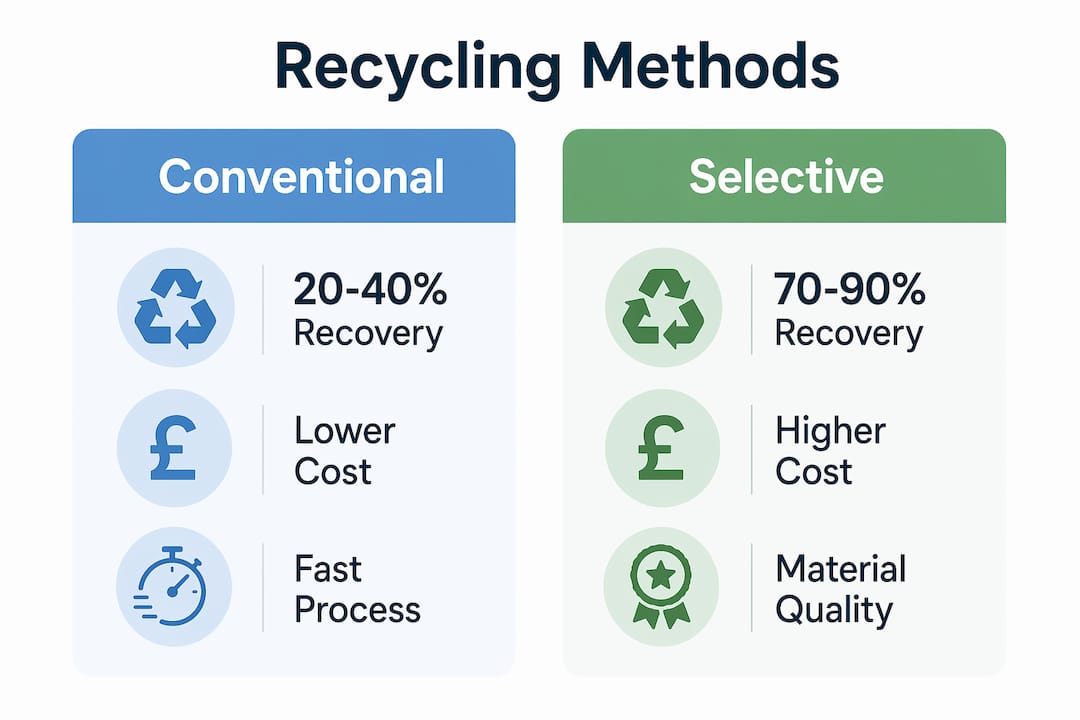
Recycling demolition waste is defined as the systematic recovery of materials from building deconstruction and demolition activities to divert debris from landfill and reintroduce it into construction supply chains. The industry term for this practice is construction and demolition waste (CDW) management, and it sits at the centre of both regulatory compliance and circular economy strategy. Conventional mechanical demolition recovers only 20–40% of materials by weight, whereas selective deconstruction pushes that figure to 70–90%. The gap between those two numbers represents both a compliance risk and a significant missed revenue opportunity for any contractor or project manager operating in 2026.
What are the main methods for recycling demolition waste?
Conventional mechanical demolition uses excavators and wrecking equipment to bring a structure down rapidly. The process is fast and cost-effective on the surface, but the mixed debris it produces makes material separation difficult, which is why recovery rates sit at 20–40%. That figure means the majority of potentially reusable concrete, timber, and metal ends up in landfill.
Selective deconstruction reverses that outcome by dismantling a building component by component in a planned sequence. Structural steel is unbolted rather than sheared, timber is carefully extracted, and fixtures are removed intact for resale. Recovery rates of 70–90% are achievable through this method, and the BRE Birmingham school case study demonstrated 82% material recovery alongside a 12% net cost saving once landfill tax avoidance and resale revenue were factored in. That outcome directly challenges the assumption that deconstruction is always the more expensive option.
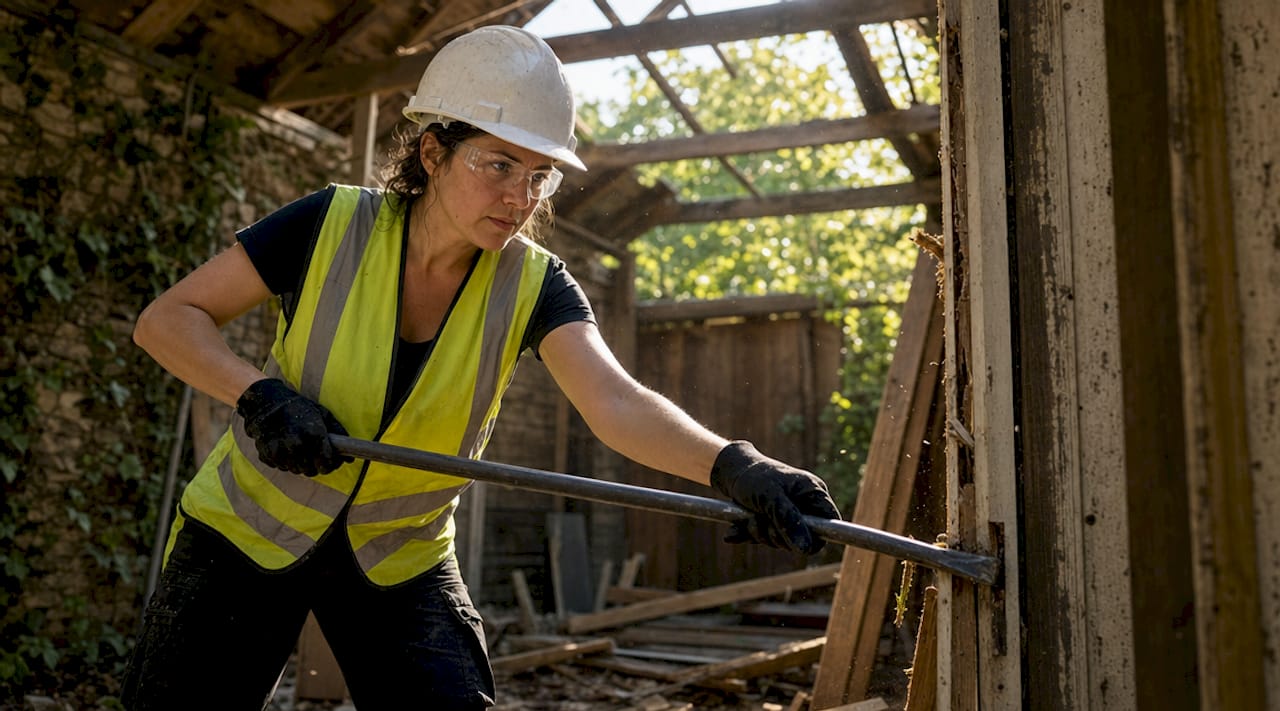
Adaptive reuse takes a third path entirely by converting an existing structure for a new purpose rather than demolishing it. This approach eliminates CDW at source and is increasingly favoured under ESG frameworks and sustainable building practices. Where full adaptive reuse is not viable, a hybrid approach combining partial strip-out with selective deconstruction often delivers the best balance of speed and recovery.
| Method | Recovery rate | Labour cost | Key advantage |
|---|---|---|---|
| Conventional demolition | 20–40% | Low | Speed and low upfront cost |
| Selective deconstruction | 70–90% | 15–40% higher | High material recovery and resale revenue |
| Adaptive reuse | Near 100% | Variable | Eliminates demolition waste entirely |
Pro Tip: Selective deconstruction takes 2–5 times longer than mechanical demolition, so build that timeline into your programme from the outset. Failing to account for it at tender stage is the single most common reason projects exceed budget.
How to plan and comply with demolition waste recycling regulations
Regulatory compliance in waste management for demolition projects is non-negotiable in 2026. In California, CalGreen mandates a minimum 65% debris diversion rate for all construction and demolition projects, with some jurisdictions proposing 70% targets. UK frameworks set comparable landfill diversion expectations, and both systems require documented evidence rather than self-reported estimates.
A Construction Waste Management Plan (CWMP) must be submitted before work commences. The plan should identify each waste stream by material type, specify the licensed facility receiving each stream, and project the diversion percentage. Weight tickets must be maintained for every waste load leaving the site. Without them, you cannot demonstrate compliance at final inspection, and the penalties for failure range from project delays to financial fines.
Common compliance failures include:
- Submitting a CWMP that lists generic disposal routes without named licensed facilities
- Failing to update the plan when site conditions change and new waste streams emerge
- Mixing hazardous materials such as asbestos with general demolition debris, which contaminates otherwise recyclable loads
- Neglecting to retain weight tickets from subcontractors handling specific material streams
- Missing the submission deadline by treating the CWMP as an afterthought rather than a pre-commencement requirement
A pre-demolition survey is the most reliable way to identify hazardous materials, quantify recoverable volumes, and build an accurate CWMP before any machinery arrives on site.
Pro Tip: Appoint a dedicated waste coordinator on larger projects. This person owns the weight ticket log, liaises with licensed processors, and updates the CWMP in real time. Projects with a named coordinator consistently pass compliance inspections with fewer queries.
What technologies and processes optimise recycling efficiency on site?
The most significant shift in material recycling in demolition over the past three years is the adoption of digital planning tools before a single wall comes down. Building Information Modelling (BIM) allows project teams to map every material in a structure, assign it a recovery category, and sequence the deconstruction to protect high-value components. AI-driven demolition sequencing builds on BIM data to optimise the order of operations, reduce carbon footprint, and identify the most efficient logistics routes for each material stream.
On site, physical sorting technology determines whether recovered materials actually re-enter supply chains or end up downgraded to aggregate. The core equipment includes:
- Jaw and impact crushers for processing concrete into recycled aggregate, which meets BS EN 12620 specifications for use in new foundations
- Magnetic separators for extracting ferrous metals from mixed demolition debris at high throughput
- Eddy current separators for recovering non-ferrous metals including aluminium and copper from processed streams
- Air classifiers for separating lightweight materials such as timber fragments and plastics from heavier mineral fractions
Steel recycling is a closed-loop process with no loss of quality across infinite cycles, making it one of the highest-value streams on any demolition site. Copper, brass, and structural steel recovered intact command scrap prices that can directly offset deconstruction labour costs.
The concept of a ‘virtual resource recovery plant’ takes this further by coordinating transport logistics, processing capacity, and end-market demand across multiple sites simultaneously. Rather than treating each demolition project as an isolated waste event, this model aggregates material flows to achieve the volumes that commodity buyers and recycling processors require. It is particularly relevant for contractors managing multiple urban redevelopment projects concurrently.
Pro Tip: Contact scrap metal merchants and reclaimed material dealers before demolition begins, not after. Knowing the current market price for structural steel or reclaimed brickwork allows you to sequence the strip-out to protect those materials and negotiate collection contracts in advance.
What common mistakes occur in demolition waste recycling and how to avoid them?
The most costly mistake in CDW management is underestimating the planning time required for selective deconstruction. Contractors who price a project on mechanical demolition rates and then attempt to recover materials for compliance purposes end up with neither the speed nor the recovery rates they need. The planning phase for a deconstruction-led approach must include a material audit, sequencing plan, and confirmed routes to market for each recovered stream.
Poor documentation is the second most frequent failure. Contractors who lack proper documentation face penalties and project delays that far exceed the cost of maintaining a compliant record-keeping system. Every subcontractor on site must understand their obligation to retain weight tickets and submit them to the waste coordinator.
Key mistakes and their corrective actions:
- Misclassifying materials: Mixed loads are rejected by licensed recycling facilities. Train operatives to segregate concrete, timber, metals, and plastics at the point of removal, not at the skip.
- Overlooking salvage value: Fixtures, fittings, and architectural elements recovered intact can be sold through reclaimed material networks. Treating salvaged materials as commodities rather than waste converts a cost centre into a revenue line.
- Ignoring market fluctuations: Scrap metal prices vary significantly. Build contractual flexibility into your processor agreements so you can hold material briefly when prices are depressed.
- Neglecting hazardous material protocols: Asbestos, lead paint, and contaminated soils require specialist handling under the Control of Asbestos Regulations 2012. Mixing these with general demolition debris creates a contaminated load that cannot be recycled. Refer to guidance on demolition hazard management before any strip-out begins.
Viewing demolition debris as a reliable raw material stream rather than waste aligns with circular economy and ESG standards, creating long-term economic resilience for contractors who adopt this mindset consistently.
Key takeaways
Effective recycling of demolition waste requires selective deconstruction methods, a compliant Construction Waste Management Plan, and technology-led sorting to maximise both material recovery and financial return.
| Point | Details |
|---|---|
| Choose the right method | Selective deconstruction recovers 70–90% of materials versus 20–40% for conventional demolition. |
| Submit documentation early | A Construction Waste Management Plan and weight tickets are mandatory before work commences. |
| Use technology to sort | BIM, AI sequencing, and physical separators maximise the quality and value of recovered materials. |
| Monetise high-value streams | Steel, copper, and brass recovered intact offset deconstruction labour costs through scrap resale. |
| Avoid contamination | Segregate hazardous materials at source to protect recyclable loads from rejection at processing facilities. |
Why I think most contractors are leaving money on the table
The conversation around sustainability in demolition has shifted considerably in the past few years, but I still see too many projects where recycling is treated as a compliance exercise rather than a commercial one. The BRE Birmingham school result, 82% recovery and a 12% net cost saving, is not an outlier. It is what happens when a project team plans for material recovery from day one instead of retrofitting it at the end.
The contractors who will be best positioned in 2026 and beyond are those who have built relationships with scrap merchants, reclaimed material dealers, and recycled aggregate processors before they need them. When you know the current price for structural steel and you have a buyer lined up before demolition starts, the economics of selective deconstruction change entirely. The labour premium becomes a procurement cost, not an overhead.
Viewing demolition sites as resource hubs rather than waste sources is not a philosophical position. It is a practical response to rising landfill tax, tightening diversion targets, and clients who are increasingly asking for ESG-aligned project delivery. The regulatory pressure is only going in one direction. The contractors who have already built the systems and supplier relationships will have a genuine competitive advantage over those who are still treating CDW as a disposal problem.
— George
How Gcscontractors supports compliant demolition and material recovery
Gcscontractors brings direct experience in strip-out and demolition projects where material recovery, regulatory compliance, and site safety must work together from the first day of planning. Whether you are managing a complex live-environment strip-out or a full structural demolition, the approach is the same: identify recoverable materials early, document every waste stream, and sequence the work to protect value.

The live site demolition process guide covers the practical steps for managing demolition projects efficiently while meeting UK waste diversion requirements. For project managers who need to get compliance documentation right from the outset, the pre-demolition survey guide provides a structured framework for material auditing and CWMP preparation. Gcscontractors works with construction professionals who need more than a contractor. They need a partner who understands the full picture.
FAQ
What is recycling in demolition?
Recycling in demolition is the process of recovering materials such as concrete, steel, timber, and metals from a demolished structure and reprocessing them for use in new construction projects. The industry term is construction and demolition waste (CDW) management.
Why recycle construction waste?
Recycling construction waste reduces landfill use, lowers disposal costs, and generates revenue from salvaged materials. Regulatory frameworks such as CalGreen mandate a minimum 65% diversion rate, making recycling a legal requirement as well as a commercial opportunity.
How do you manage demolition waste effectively?
Effective waste management in demolition requires a Construction Waste Management Plan submitted before work begins, on-site segregation of material streams, weight ticket records for every load, and confirmed routes to licensed recycling or processing facilities.
What materials can be recovered from demolition sites?
Concrete, structural steel, timber, copper, brass, aluminium, reclaimed brickwork, and architectural fixtures are all recoverable. Steel is particularly valuable because it can be recycled infinitely without loss of quality, making it a high-priority recovery target on any site.
What is the difference between demolition and selective deconstruction?
Conventional demolition uses mechanical equipment to bring a structure down quickly, recovering 20–40% of materials. Selective deconstruction dismantles components in a planned sequence to achieve 70–90% recovery, at the cost of higher labour time and upfront planning.