What is a demolition method statement: the UK guide
A demolition method statement is a formal written document that records the planned sequence, methods, equipment, and safety controls for demolition work before any activity begins on site. Under CDM 2015 Regulation 20, it is a legal requirement for all demolition and dismantling work in the UK. Without one, work cannot lawfully start.
What is a demolition method statement and why does it matter?

The document specifies who does what, when, and how at every stage of the demolition. It is not a generic template with a project name swapped in. A genuine method statement is site-specific, produced before work begins, and typically issued at tender stage so all contractors are aligned from the outset.
A well-prepared statement covers:
- The planned demolition sequence, floor by floor or element by element
- Identification of hazardous materials, including asbestos
- Structural stability measures at each stage
- Exclusion zone dimensions and management
- Utility isolation and verification procedures
- Emergency response arrangements and evacuation routes
- Equipment and methods assigned to each phase
- Named competent persons responsible for supervising each activity
The document forms the operational backbone for the entire project, bridging design documentation and live site realities so that every subcontractor understands the hazard controls and emergency protocols before they set foot on site.
What must a demolition method statement contain?
The mandatory content covers far more than a broad description of the work. Each section must be specific to the site conditions found, not copied from a previous project.
- Pre-demolition structural survey: Confirms load paths, identifies weaknesses, and informs the sequence. See the pre-demolition survey guide for what this involves in practice.
- Demolition sequence: Structures are generally demolished in reverse order to their construction. The sequence must be stated floor by floor and element by element, not in general terms.
- Hazardous materials management: Asbestos, lead, and other substances require specific removal, containment, and disposal procedures before structural demolition begins.
- Exclusion zones: Dimensions must reflect the specific demolition technique and site conditions, not a standard figure applied across all jobs.
- Utility isolation: All services must be isolated and verified dead before work proceeds.
- Emergency procedures: Incident reporting routes, first aid arrangements, and evacuation plans must all be documented.
- Equipment and methods: Each phase must state the specific plant and techniques to be used.
- Responsible persons: Every activity must name the competent person accountable for its safe execution.
How does a demolition safety plan manage risk on site?
Risk management sits at the core of every method statement. The document does not simply list hazards; it specifies the controls that will prevent or reduce them, and assigns responsibility for monitoring those controls throughout the project.
Key safety provisions include:
- Site-specific risk assessments identifying structural, chemical, and environmental hazards
- Structural stability monitoring at each demolition step to prevent unexpected collapse
- Controlled management of asbestos and other hazardous materials, with licensed removal where required
- Enforced exclusion zones protecting both workers and the public
- Clear emergency procedures covering incident reporting, first aid, and evacuation
- PPE requirements specified for each activity and enforced through supervision
- Health and safety training and competency checks for all operatives
Pro Tip: Link your safety management software directly to the method statement so that any site condition change triggers an automatic review prompt, keeping your documentation and your controls in step.
What regulations govern demolition method statements in the UK?
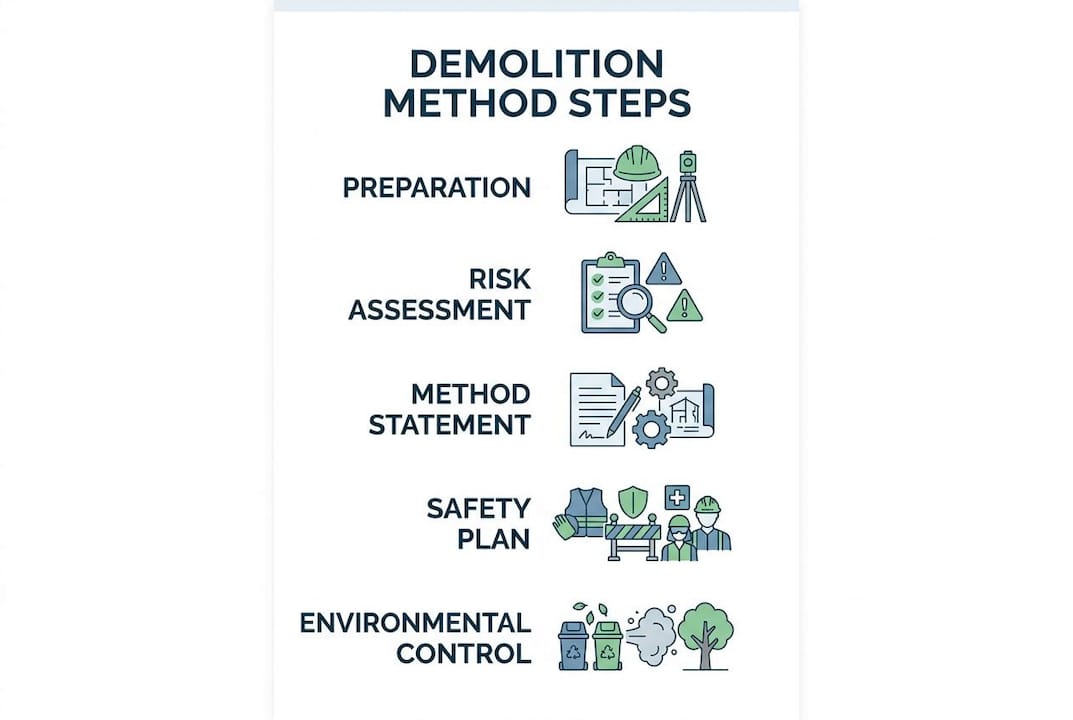
The legal framework is clear and non-negotiable. CDM 2015 Regulation 20 requires that demolition is planned and carried out in a manner that prevents danger, with arrangements recorded in writing before work begins. British Standard BS 6187:2011 Clause 5.2.3 sets out the code-of-practice framework for what the statement must contain, and Clause 5.2.4 makes explicit that the document must be revised whenever site conditions change.
Compliance obligations include:
- Principal contractors must produce or commission the method statement and integrate it with the Construction Phase Plan
- The Health and Safety Executive (HSE) can inspect and enforce against non-compliant documentation
- The method statement must be updated before work resumes if conditions, techniques, or sequences change
- Demolition contractors must ensure all operatives have been briefed on the current version before starting each phase
- Competent persons must be named and present for each supervised activity
Failing to integrate the method statement with the wider Construction Phase Plan is one of the most common compliance pitfalls on UK sites, and one the HSE actively looks for during inspections.
Best practices for writing and implementing a demolition method statement
Treat the method statement as a live document, not a box-ticking exercise completed at tender and filed away. Experienced demolition contractors give particular attention to daily briefings and toolbox talks tied directly to the current version of the statement.
- Update the document before any change to sequence, method, or site conditions takes effect
- Document load path changes at every demolition step to prevent structural collapse
- Consult the workforce and subcontractors during preparation, not after
- Integrate the statement fully with the Construction Phase Plan to avoid procedural gaps
- Conduct daily briefings and toolbox talks referencing the live method statement
- Avoid generic language; every phase must name the equipment, the technique, and the responsible person
Environmental considerations for UK demolition projects
UK demolition projects carry specific environmental obligations that must be addressed within the method statement and wider project documentation.
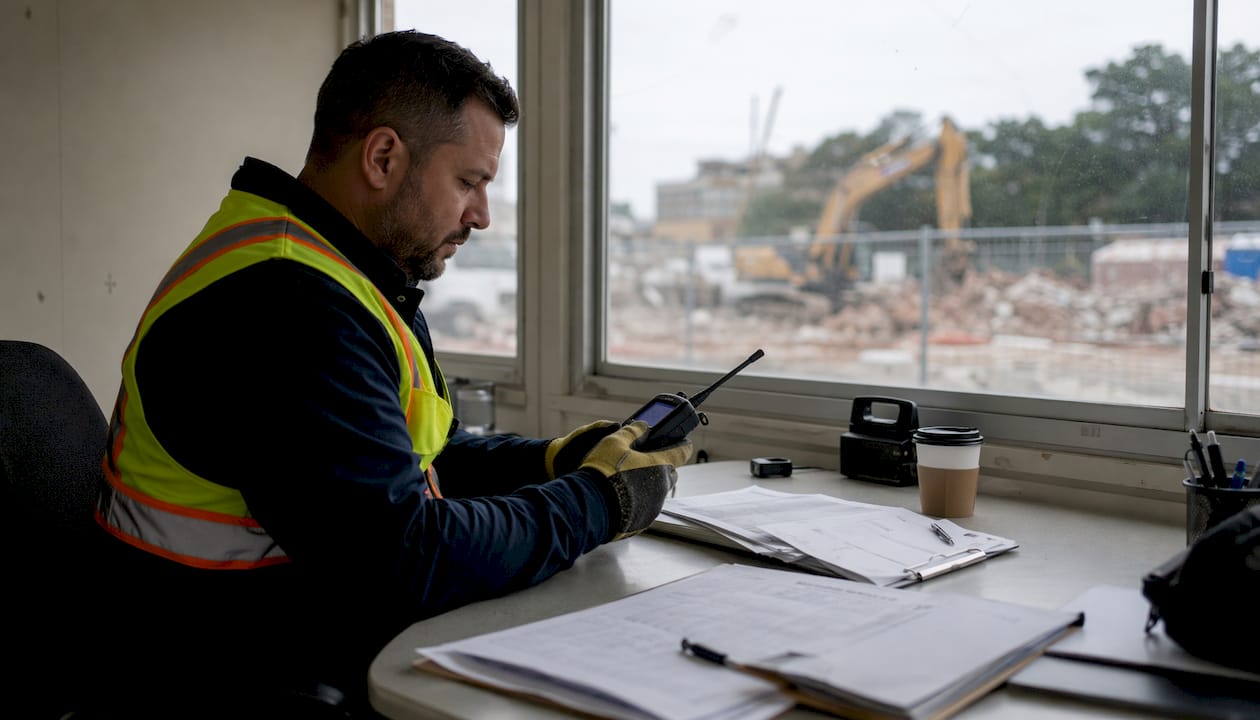
Waste management is governed by the Environmental Protection Act 1990 and the Hazardous Waste Regulations 2005. All demolition waste must be classified, segregated, and disposed of through licensed carriers. Asbestos waste requires specialist licensed disposal and cannot be mixed with general construction waste.
Dust and noise controls protect neighbouring properties and the public. Water run-off from demolition sites can carry contaminants into drainage systems, so silt traps and bunded areas are standard requirements on most UK sites. Where protected species or habitats may be present, an ecological survey is required before demolition begins.
Key takeaways
A demolition method statement is a legal requirement under CDM 2015 Regulation 20, and must be site-specific, detailed, and updated whenever conditions change.
| Point | Details |
|---|---|
| Legal requirement | CDM 2015 Regulation 20 mandates a written method statement before any demolition begins. |
| Site-specific content | Generic templates do not satisfy the requirement; every section must reflect actual site conditions. |
| Live document | BS 6187:2011 Clause 5.2.4 makes explicit that the document must be revised whenever site conditions change. |
| Hazardous materials | Asbestos and other hazardous substances must be identified, managed, and disposed of under separate licensed procedures. |
| Integration with CPP | The method statement must be embedded within the Construction Phase Plan to avoid safety gaps. |
Gcscontractors delivers strip-out and demolition services across Cambridge and the wider East of England, with full compliance documentation prepared as standard on every project. If you are planning a demolition and need a competent contractor who treats the method statement as a working tool rather than a formality, contact the Gcscontractors team today.