What are a commercial client’s duties under CDM 2015?
A commercial client’s core duty under CDM 2015 is simple to state and harder to execute: you must make suitable arrangements for managing the project, appoint a principal designer and principal contractor where more than one contractor is involved, provide pre-construction information, and ensure a construction phase plan and health and safety file exist before work starts. This is not a background legal formality. The Health and Safety Executive (HSE) confirms clients carry these duties personally, even when a contractor like Gcscontractors is running the works.
The immediate actions:
- Establish whether your project needs a principal designer and principal contractor (any job with more than one contractor).
- Start gathering pre-construction information now, not once the tender goes out.
- Set aside real time and budget for compliance, not just construction.
Key Takeaways
Meeting CDM client duties depends on early appointments, complete pre-construction information, and treating the health and safety file as a permanent asset rather than paperwork.
| Point | Details |
|---|---|
| Appoint early | Bring in your principal designer and principal contractor before construction starts, not at tender award. |
| Resource pre-construction properly | Allocate real time and budget to gathering site information before design work begins. |
| Check competence with evidence | Ask for comparable project examples and named personnel rather than relying on assurances alone. |
| Preserve the health and safety file | Store it centrally and hand it over intact when you dispose of your interest in the structure. |
| Confirm notification thresholds early | Check whether your project needs an F10 submission before you finalise the programme. |
Table of Contents
- Overview of core client duties under CDM 2015
- Appointments and competence: principal designer, principal contractor and responsibilities
- Pre-construction information and the construction phase plan (CPP)
- Health and safety file, handover and life after completion
- When does a project need HSE notification (F10)?
- Turning CDM duties into project controls that actually work
- Where does building compliance intersect with other project obligations?
- Get compliant demolition and groundworks support from the outset
- A pragmatic take on where clients actually go wrong
- Where to read the full CDM 2015 guidance
- Sources
Overview of core client duties under CDM 2015
“Suitable arrangements” is the phrase CDM 2015 uses, and it means exactly what it sounds like: proportionate governance for the size and risk of your project. A domestic extension needs less structure than a multi-contractor demolition and groundworks scheme. What stays constant is the requirement to have someone accountable, a clear sequence of decisions, and enough budget to act on them.
Three duties sit at the centre of this:
- Governance and resourcing — you need to allocate time, money, and decision-making authority before the project starts, not once problems appear.
- Welfare facilities — HSE’s CDM 2015 guidance requires suitable welfare provision on site for the duration of works, and that obligation sits with you as client, not just your contractor.
- Ongoing review — arrangements made at the outset need revisiting as the project evolves; a site condition survey from month one rarely covers what turns up in month four.
Clients who under-resource the pre-construction phase tend to pay for it later in delays and safety incidents, a pattern legislation covering client duties implicitly anticipates by placing these obligations at the front of the process rather than treating them as an afterthought.
Appointments and competence: principal designer, principal contractor and responsibilities
Regulation 5 sets a clear timing rule: appoint your principal designer and principal contractor as soon as practicable, and always before the construction phase begins. Leaving this until tender award is common and almost always too late, particularly for the principal designer, whose input shapes design decisions long before anyone breaks ground.
Competence checking does not mean becoming a technical expert yourself. It means asking for evidence:
- Examples of comparable projects the appointee has delivered.
- Named personnel with relevant qualifications and experience.
- Organisational capacity to manage the specific risks your project presents.
If you fail to appoint a principal designer or principal contractor where one is required, the duties do not disappear. They fall to you as client, along with the legal exposure that comes with fulfilling roles you likely have neither the time nor the specialism to perform.
Pro Tip: Write competence requirements directly into your appointment brief rather than checking them informally afterwards. It gives you a documented basis to reject an unsuitable bid, and evidence of due diligence if anything is later questioned.
Pre-construction information and the construction phase plan (CPP)
Pre-construction information is everything the design and construction teams need to plan the work safely: existing structural drawings, asbestos surveys, ground condition reports, known services, and any history of contamination or previous site use. Regulation 4 requires clients to provide this as soon as is practicable, well before a contractor sets foot on site.
Typical content includes:
- Site constraints such as access, boundaries, and neighbouring occupiers.
- Known hazards, including asbestos registers and historical ground surveys.
- Existing services records and any prior demolition or remediation reports.
The principal contractor prepares the construction phase plan, but it can only be as good as the information you supply. On live-environment projects with occupied neighbouring buildings, incomplete pre-construction information routinely translates into method statement delays once site surveys start contradicting the assumptions in the tender pack. Give the project team early access to any historical reports you hold, even if they seem incomplete or dated.
Health and safety file, handover and life after completion
A health and safety file is required whenever more than one contractor works on a project, and it exists for a purpose beyond the current works: it tells whoever owns or maintains the structure next what they are dealing with. The principal designer compiles and maintains it, but you as client carry the duty to keep it accessible and hand it over intact if you sell or otherwise dispose of your interest in the building.
- Store the file where it survives staff changes and site handovers, not on one project manager’s laptop.
- Treat it as a long-term asset tied to the building’s lifecycle, not paperwork to file once practical completion is signed off.
- Brief any incoming owner on what the file contains and why it matters before you transfer it.
Regulation 4 makes this transfer a legal requirement, not a courtesy, when the client’s interest in the structure changes hands.
When does a project need HSE notification (F10)?
Notification via HSE’s F10 form is required for projects that meet certain duration and workforce thresholds set by the HSE.
- The principal contractor usually submits F10, though the duty ultimately sits with the client to confirm it happens.
- Submit before construction work starts. Notification does not authorise the work or replace any other legal duty; it simply tells HSE the project exists.
- Not every commercial project is notifiable. Check the threshold early so you are not caught out mid-tender.
Turning CDM duties into project controls that actually work
Legal duties only protect you if they show up in your project controls, not just your policy folder. A practical sequence works better than trying to remember every regulation at once:
- Appointment brief stage — write competence criteria and CDM roles into the tender documents before you issue them.
- Pre-construction pack — assemble surveys, asbestos registers, and ground reports before designers start work, not alongside it.
- Procurement checks — verify insurance, method statements, and named competent personnel before signing.
- Mobilisation — confirm welfare facilities, site inductions, and the construction phase plan are live before anyone starts work.
- Monitoring — hold regular progress reviews focused on dutyholder compliance rather than technical supervision you are unlikely to be qualified to perform.
- Handover — transfer the health and safety file and confirm the new owner understands its purpose.
The most common failure points are predictable: under-resourcing the pre-construction phase, appointing a principal designer too late to influence early decisions, and losing the health and safety file in the gap between project closeout and sale. Site preparation done properly closes most of these gaps before they open.
Pro Tip: Bring in a temporary works coordinator early on any scheme involving BS5975 temporary works, propping, or excavation support. Confirming this appointment during the appointment brief stage, rather than once site operations are under way, avoids the scramble that follows a late discovery that no one has formally taken on the role.
Where does building compliance intersect with other project obligations?
CDM compliance rarely sits in isolation. Clients running larger commercial refurbishments often need to coordinate health and safety duties alongside separate regulatory requirements, including energy performance obligations that fall due at different project milestones. Guidance on commercial EPC requirements is worth reviewing alongside your CDM planning if your project involves refurbishment works subject to both regimes.

Get compliant demolition and groundworks support from the outset
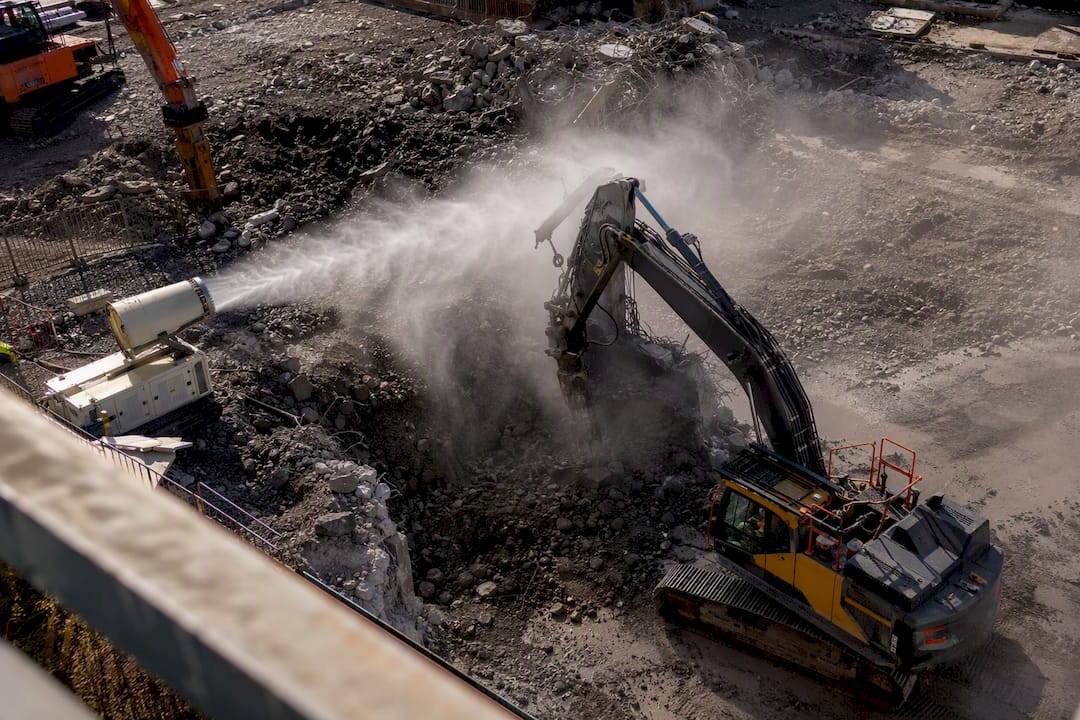
Meeting your CDM client duties is considerably easier when the contractor delivering the works understands the regulatory framework as well as the physical one. Gcscontractors works within CDM 2015 requirements on strip-out, demolition, and groundworks projects across Cambridge and East Anglia, including live-environment sites where minimising disruption to occupied buildings is as important as the technical sequencing. If demolition forms part of your scheme, the demolition sequence breakdown for project managers sets out how pre-construction information and site sequencing come together on a live commercial job.
A pragmatic take on where clients actually go wrong
Most guidance on CDM client duties reads as if compliance were a paperwork exercise: appoint the right people, file the right documents, tick the boxes. That framing undersells the actual risk. The clients who run into trouble are rarely the ones who skipped a form. They are the ones who appointed a principal designer weeks after design decisions were already locked in, or who handed over incomplete site history because nobody thought to dig out the old asbestos survey until a contractor found something unexpected mid-strip.
The conventional advice to “ensure competence” also understates how little technical expertise you actually need as a client. You are not expected to become a health and safety specialist. You are expected to specify competence clearly in your appointment documents, ask for evidence rather than assurances, and hold focused reviews that check whether your principal contractor and principal designer are actually doing what they said they would. Delegation of tasks is fine. Delegation of legal accountability is not possible, whatever your contract says.
If there is one priority worth acting on before anything else, it is timing. Every duty in CDM 2015 works better the earlier it starts, and every failure pattern in this area traces back to something done too late.
— George
Where to read the full CDM 2015 guidance
For the complete legal text and official guidance, consult HSE’s CDM 2015 summary, the regulations on legislation.gov.uk, HSE guidance L153, and CITB’s CDM overview.
This article is general information, not a substitute for advice from a qualified lawyer. Consult a qualified legal professional about your own circumstances before acting on anything here.