Site preparation: 8 essential steps for compliant UK projects
Overlooked site preparation steps are one of the most reliable ways to turn a well-funded UK construction project into a costly, compliance-riddled headache. Ground surprises, missing CDM documentation, and inadequate utility searches catch out even experienced project managers. The consequences range from programme delays and budget overruns to enforcement action from the HSE. This guide walks you through every essential stage, from pre-construction surveys and regulatory prerequisites through to excavation, drainage, and final compliance verification, so your next project starts on solid ground.
Table of Contents
- What you need before starting site preparation
- Step-by-step: Key site preparation actions
- Managing risks and common pitfalls in site preparation
- Verifying compliance and preparedness before work commences
- Our take: Why robust prep beats speed, every time
- Ensure success with expert help on your next project
- Frequently asked questions
Key Takeaways
| Point | Details |
|---|---|
| Start with compliance | Securing all documents and surveys upfront prevents regulatory delays and fines. |
| Follow a proven process | Adhering to the full sequence of site preparation steps ensures no detail is missed. |
| Prioritise early investigation | Early surveys and ground tests tackle surprises before they cost you time and budget. |
| Formalise checks before build | A final compliance verification avoids late, expensive corrections on site. |
What you need before starting site preparation
Before a single machine rolls onto site, you need a clear picture of what you are dealing with, legally and physically. Many projects run into trouble not because of poor execution, but because the preparation phase was treated as a formality rather than a critical workstream.
From a compliance standpoint, CDM 2015 compliance requirements are non-negotiable. You must have a Construction Phase Plan in place before construction starts. This document must cover site rules, risk controls, and welfare facilities. You also need a pre-construction information dossier covering site history, ground conditions, and utilities. For notifiable projects, an F10 notification to the HSE is mandatory.
Beyond the legal minimum, the surveys you commission before mobilisation will define the quality of every decision that follows. Here is what a thorough pre-construction survey programme typically includes:
- Site history review: Identifies previous uses, contamination risk, and structural remnants below ground
- Utilities survey: Locates live services including gas, water, electricity, and telecoms
- Topographical survey: Maps existing levels, boundaries, and features to inform design
- Ground and soil investigation: Assesses load-bearing capacity, contamination, and groundwater
- Ecological survey: Required where protected species or habitats may be present
- Archaeological assessment: Particularly relevant on brownfield or historically sensitive land
Urban and rural sites carry different demands. Urban projects often require SuDS (Sustainable Drainage Systems) compliance, more detailed utility searches due to service density, and early engagement with local authorities on traffic management. Rural sites may need ecological surveys earlier in the process and face different ground condition risks.
Pro Tip: Start CDM planning before you engage contractors. Waiting until procurement to address your Construction Phase Plan creates rework and can trigger regulatory blocks that delay your start date by weeks.
A comprehensive groundworks checklist will help you confirm every prerequisite is in place before mobilisation.
| Requirement | Urban sites | Rural sites |
|---|---|---|
| Utility search depth | High complexity | Lower complexity |
| SuDS compliance | Usually required | Case by case |
| Ecological survey | Often needed | Frequently needed |
| Archaeological assessment | Brownfield priority | Greenfield risk |
| F10 notification | Notifiable projects | Notifiable projects |
Step-by-step: Key site preparation actions
Once your prerequisites are confirmed, follow these sequential actions to ensure nothing falls through the cracks. The order matters. Skipping ahead or running steps out of sequence is a common source of costly rework.
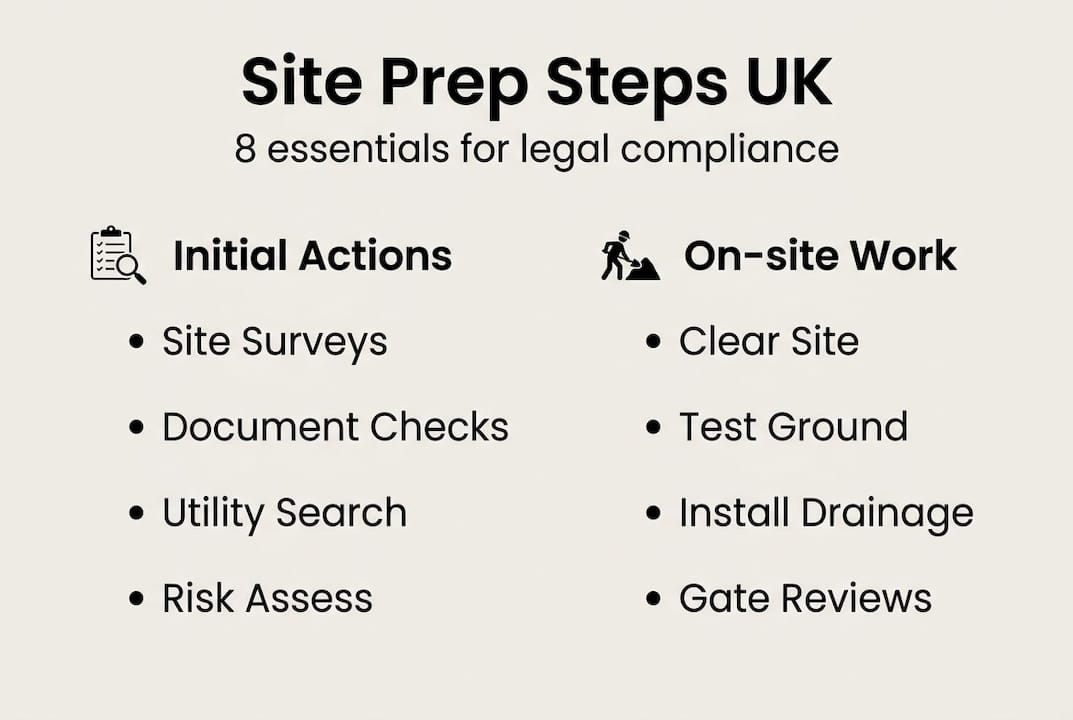
The ground preparation steps for a typical UK build follow a clear progression:
- Site clearing and vegetation removal: Strip topsoil, remove trees, scrub, and any surface obstructions. Dispose of material in line with waste regulations.
- Site surveying and staking: Establish set-out points and confirm boundaries against your topographical survey data.
- Soil testing and ground investigation: Commission laboratory analysis of soil samples to confirm load-bearing capacity and identify contamination.
- Site plan design: Use ground investigation results to finalise foundation design and drainage layout. This step often feeds back into step three if results are unexpected.
- Environmental and historical investigation: Confirm ecological and archaeological clearances before breaking ground.
- Excavation: Carry out bulk and detailed excavation to formation levels, with spoil managed and removed or reused on site.
- Drainage installation: Install surface water and foul drainage systems in line with approved drawings and Building Regulations Part H.
- Land grading and levelling: Bring formation levels to design tolerances, ready for foundations or further groundworks.
Missed ground investigation is a leading cause of unplanned costs on UK projects. Discovering contaminated soil or unsuitable bearing strata after excavation has started is far more expensive to address than identifying it during the investigation phase.
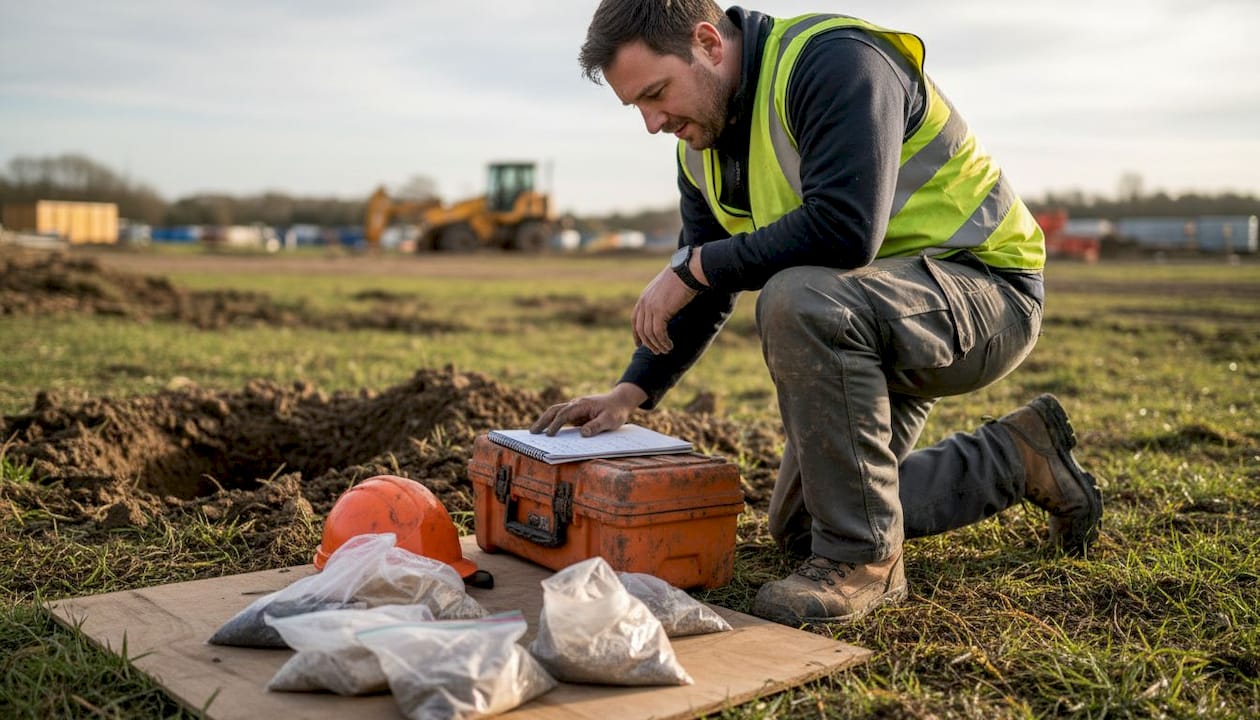
Steps four and three often require iteration. If soil test results reveal unexpected conditions, your structural engineer may need to revise the foundation design before excavation proceeds. Build this loop into your programme from the outset.
| Step | Typical urban timeline | Typical rural timeline |
|---|---|---|
| Surveys and investigations | 3 to 6 weeks | 2 to 4 weeks |
| Clearing and vegetation removal | 1 to 2 weeks | 1 to 3 weeks |
| Excavation | 2 to 4 weeks | 1 to 3 weeks |
| Drainage installation | 2 to 3 weeks | 1 to 2 weeks |
| Grading and levelling | 1 to 2 weeks | 1 to 2 weeks |
For guidance on managing excavation and drainage on complex sites, experienced groundworks contractors can help you sequence the work efficiently.
Managing risks and common pitfalls in site preparation
Understanding the stepwise process brings clarity, but proactive risk management is what separates well-run projects from problem-laden ones. The risks in site preparation are predictable. Most of them appear repeatedly across UK projects, which means they are also preventable.
The most common risks and pitfalls include:
- Contaminated ground: Brownfield sites carry a high risk of chemical, biological, or physical contamination. Without early investigation, you may not discover the problem until excavation is underway.
- Hidden historic utilities: Older utility records are often incomplete or inaccurate. Striking an uncharted live cable or main is a serious safety incident and a programme stopper.
- Overlooked surveys: Ecological and archaeological surveys are frequently deprioritised to save time. Discovering a protected species or a scheduled monument mid-project is far more disruptive.
- Incomplete CDM plans: A Construction Phase Plan that does not reflect actual site conditions is a compliance liability. It must be a live document, updated as conditions change.
- Late engagement with local authorities: Planning conditions, highways agreements, and drainage consents take time. Leaving these to the last moment is a reliable source of delay.
The site preparation checklist approach is sound, but it only works if the checklist is genuinely used and updated. A static document reviewed once at project start is not risk management.
Pro Tip: Maintain a live risk register and update it after every major survey or investigation. Review it formally at each stage gate before proceeding to the next preparation step.
“Safety and compliance must come before speed or cost savings.” This is the consistent position across the UK construction industry, and it reflects hard experience from projects where cutting corners in preparation led to far greater costs downstream.
Early site investigations are the single most effective investment you can make in avoiding delays and cost overruns. Integrating CDM planning from the outset, rather than treating it as an administrative task, is equally important.
Verifying compliance and preparedness before work commences
To avoid costly last-minute surprises, formal verification is the final but vital step before breaking ground. Many projects reach this point with most documents in place but without a structured sign-off process. That gap is where compliance failures occur.
Over 80% of major UK project overruns relate to pre-construction or preparation issues. Verification is not a bureaucratic exercise. It is the mechanism that confirms your project is genuinely ready to proceed.
A structured verification workflow should include the following steps:
- Confirm all surveys are complete and reviewed: Topographical, ground, ecological, archaeological, and utility surveys must all be formally signed off.
- Verify CDM documentation: Construction Phase Plan, pre-construction information, and F10 notification (where required) must be current and accurate.
- Check local authority approvals: Planning conditions, highways consents, and drainage approvals must be confirmed in writing.
- Mark and verify utilities: All live services must be located, marked on site, and communicated to the site team.
- Multi-party sign-off: Designer, principal contractor, and key stakeholders should formally confirm readiness before mobilisation.
The sequential survey-clear-excavate-grade approach is the industry consensus for good reason. Each step builds on the last, and verification confirms that each stage has been completed to the required standard.
Sign-off should not be a single event at the end of preparation. Build stage-gate reviews into your programme so that issues are caught and resolved progressively rather than all at once. For practical groundworks verification tips, a structured checklist reviewed at each stage gate is the most reliable approach.
Our take: Why robust prep beats speed, every time
We have worked on enough UK construction projects to say this with confidence: the pressure to accelerate site preparation almost never produces the time savings it promises. What it reliably produces is problems that surface later, at a point in the programme when they are far more expensive and disruptive to resolve.
The projects that run smoothest are almost always the ones where the preparation phase was treated with the same rigour as the build itself. Surveys completed in full. CDM documentation genuinely current. Utilities properly located and marked. Verification signed off by the right people.
Shortcutting any of these steps rarely saves more than a few days on the front end. The rework, regulatory intervention, or ground surprises that follow can cost weeks or months. We have seen contamination discovered mid-excavation, uncharted services struck during clearing, and CDM plans that bore no resemblance to actual site conditions.
Our advice is straightforward. Invest heavily in the early phases. Work with an experienced site preparation team that understands both the technical and compliance demands of UK groundworks. The project’s long-term success depends on what happens before the build starts.
Ensure success with expert help on your next project
Putting these steps into practice on a live project requires more than a checklist. It requires experienced contractors who understand UK compliance requirements, ground conditions, and the sequencing demands of complex site preparation.

At GCS Contractors for groundworks solutions, we specialise in site preparation, groundworks, and civil engineering across the UK. From initial strip-out and vegetation clearance through to drainage installation and land grading, we manage the full preparation process with a focus on safety, compliance, and quality workmanship. Whether you are working on a brownfield regeneration or a new-build development, our team is ready to support your project from the ground up. Get in touch to discuss your requirements.
Frequently asked questions
What are the main steps in site preparation for UK construction?
The main preparation steps are site clearing, surveys, ground testing, planning, excavation, drainage installation, and grading, followed by formal compliance checks before work commences.
Which surveys are essential before construction starts?
Topographical, soil and ground, ecological, archaeological, and utility surveys are typically required to satisfy UK regulatory requirements and inform safe, compliant design.
What compliance documents are mandatory for site preparation?
Under CDM 2015, you must have a Construction Phase Plan, pre-construction information dossier, F10 notification where applicable, and completed survey reports before construction begins.
Why is early ground investigation critical?
Early ground investigation identifies contamination, poor bearing strata, or groundwater issues before excavation starts, preventing the costly delays that come with late discovery of ground problems.