Drainage installation Cambridge: the homeowner’s guide
Drainage installation in Cambridge is the process of fitting underground pipe systems, soakaways, and surface channels to manage water flow and protect property from water damage. Cambridge properties face particular challenges: the region’s clay-heavy soils and high water table slow natural drainage significantly, making professional installation a practical necessity rather than an optional upgrade. The National Association of Drainage Contractors (NADC) and the Water Jetting Association set the industry standards that qualified contractors must meet. Getting this right from the outset protects your foundations, your garden, and your long-term property value.
What does drainage installation in Cambridge actually involve?
Drainage installation is the industry term for fitting a complete water management system beneath or around a property. The work covers surface water drainage, foul drainage, French drain installation, soakaway construction, and connection to existing mains infrastructure. Drainage services in Cambridge also routinely include CCTV surveys, drain repairs, and septic tank installations tailored to each site’s specific requirements.
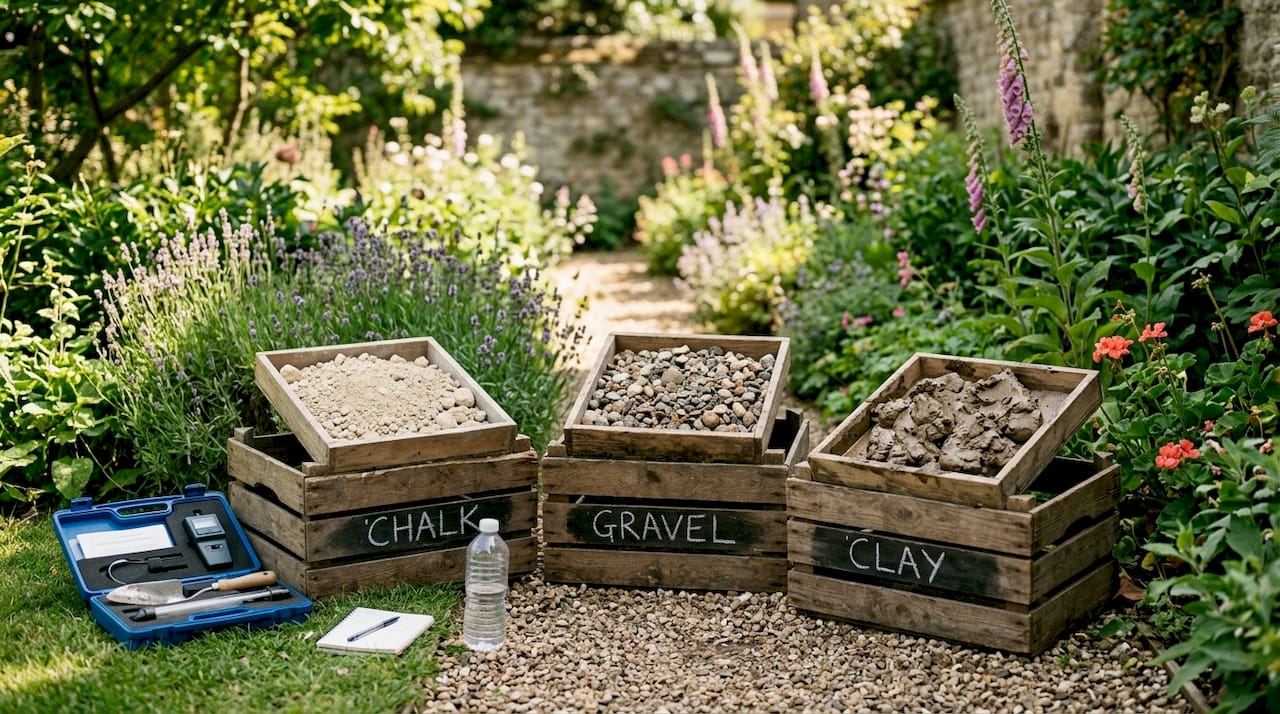
Cambridge sits on a mix of chalk, gravel, and clay geology. That variation means a drainage system that works perfectly in one postcode can fail within a few streets. A properly designed system accounts for local soil permeability, the depth of the water table, and the proximity of existing public sewers. Skipping that assessment is the single most common reason drainage systems underperform within their first few years.
What site assessment is needed before installation begins?
A thorough site assessment is the foundation of any successful drainage project. Contractors must evaluate soil type, existing drainage routes, the local water table, and any protected structures nearby before a single trench is dug. Skipping this stage leads to undersized pipes, incorrect gradients, and systems that flood during heavy rainfall.
The table below outlines the most common assessment methods and what each one reveals.
| Assessment method | What it identifies | When it is used |
|---|---|---|
| CCTV drain survey | Blockages, pipe condition, existing routes | Before any new connection or repair |
| Percolation test | Soil drainage rate for soakaway sizing | New soakaway or French drain projects |
| Water table survey | Depth of groundwater at different seasons | Sites with known flooding or clay soils |
| Topographic survey | Surface gradients and natural water flow | Large residential plots and new builds |
| Desk study | Historic drainage records and utility maps | All projects prior to excavation |
Permits are another pre-installation requirement that homeowners often overlook. Connecting to a public sewer requires approval from the local water authority under the Water Industry Act 1991. Building Regulations Part H governs the design of drainage systems in England, covering pipe sizing, gradients, and inspection chamber placement. Gcscontractors handles these regulatory checks as part of its groundworks service, which reduces delays and avoids costly redesigns mid-project.
Pro Tip: Commission a CCTV drain survey before any new installation. It maps existing underground infrastructure and prevents accidental damage to live pipes during excavation.
How do you choose a qualified drainage contractor in Cambridge?
The right contractor holds verifiable credentials, carries adequate insurance, and provides a written contract before work begins. Professional drainage contractors in Cambridge should hold NADC membership and Water Jetting Association approval to guarantee safety and quality. Verifying those credentials through the relevant industry bodies confirms the contractor complies with current national and local drainage regulations.
Key checks to carry out before appointing any contractor:
- NADC membership: Confirms training in drainage installation, repair, and safety procedures.
- Water Jetting Association approval: Required for any high-pressure jetting work on existing drains.
- Public liability insurance: Protects you if the contractor damages your property or a neighbouring structure.
- Employer’s liability insurance: Legally required if the contractor employs staff on your site.
- Written references or verified reviews: Ask for at least two recent local projects of similar scope.
- Itemised written quote: Covers labour, materials, disposal, and reinstatement separately.
On cost, standard drainage services in Cambridge typically range from £150 to £500, varying by project complexity and site access. Emergency call-out fees generally range from £80 to £140. Those figures are useful benchmarks when comparing quotes. A quote significantly below that range warrants scrutiny: it often signals that reinstatement, testing, or waste disposal costs have been excluded.
Homeowners can usually book drainage services within 1–3 days, with urgent requests receiving quotes in minutes through local trade platforms. Same-day emergency services may be available in the CB postcode area depending on contractor availability.
Pro Tip: Always request a fixed-price contract rather than a day-rate agreement for drainage installation. Day rates create little incentive for efficiency and make final costs unpredictable.
What steps should you expect during the installation process?
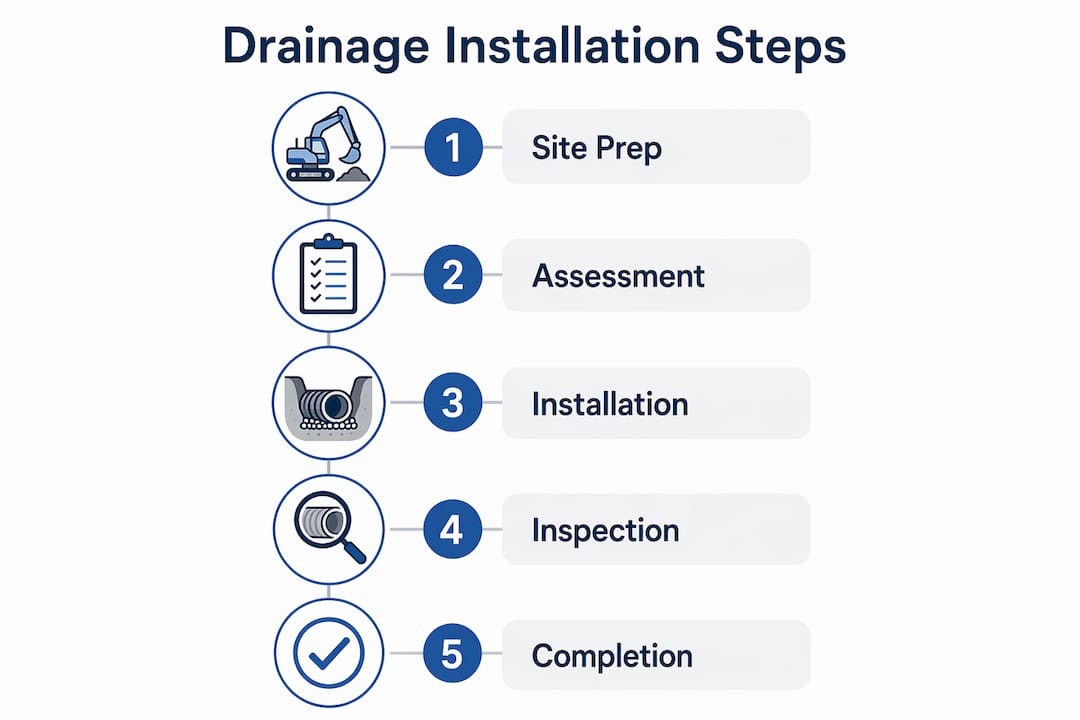
A well-managed drainage installation follows a clear sequence. Understanding each stage helps you oversee the work confidently and spot problems before they become expensive. Typical drainage installation includes site preparation, pipe laying, soakaway installation, and surface restoration with testing at completion.
- Site preparation. The contractor marks out pipe routes, locates existing utilities, and sets up welfare and safety provisions. Traffic management may be required for roadside works.
- Excavation. Trenches are dug to the specified depth and gradient. In Cambridge, clay soils often require shoring to prevent trench collapse.
- Pipe laying. Pipes are bedded on granular material at the correct gradient. Building Regulations Part H specifies a minimum gradient of 1:40 for 100mm foul drainage pipes.
- Access chamber and inspection point installation. Chambers are positioned at every change of direction and at intervals along straight runs to allow future maintenance access.
- Soakaway or connection installation. Surface water is directed either to a soakaway crate filled with gravel or connected to the surface water sewer, subject to local authority approval.
- Backfilling. Trenches are backfilled in compacted layers to prevent settlement. Poorly compacted backfill is a leading cause of sunken paths and cracked driveways after installation.
- Surface reinstatement. Tarmac, block paving, or topsoil is restored to match the surrounding finish.
- Inspection and testing. Post-installation inspection and testing verifies system effectiveness before project handover. This typically includes a water test and, on larger projects, a CCTV verification run.
The table below summarises key tasks, typical durations, and quality checkpoints for a standard residential installation.
| Stage | Typical duration | Quality checkpoint |
|---|---|---|
| Site preparation | Half a day | Utility locations confirmed, safety barriers in place |
| Excavation | 1–2 days | Correct trench depth and gradient verified |
| Pipe laying | 1–2 days | Gradient checked with spirit level or laser |
| Chamber installation | Half a day | Covers flush with finished surface level |
| Backfilling | 1 day | Compaction tested in layers |
| Surface reinstatement | 1 day | Finish matches surrounding area |
| Testing and sign-off | Half a day | Water test passed, documentation issued |
Pro Tip: Ask your contractor for a post-installation CCTV report. It provides a baseline record of pipe condition that is invaluable if a dispute arises or if you sell the property.
What are the most common drainage installation mistakes?
Common drainage installation errors include improper pipe slope, poor pipe material choice, and inadequate site access causing delays or failures. Each of these is avoidable with proper planning and qualified oversight.
- Incorrect pipe gradient. A gradient that is too shallow causes solids to settle and block the pipe. A gradient that is too steep causes water to race ahead of solids, leaving them stranded. The correct gradient depends on pipe diameter and flow rate, not guesswork.
- Wrong pipe material. uPVC is standard for most residential drainage, but clay or ductile iron may be specified in areas with heavy vehicle loading or aggressive ground conditions. Using the wrong material leads to premature failure.
- Undersized pipes. Pipes sized for a single property often cannot handle the combined flow from an extension or new development. Always size pipes for the maximum anticipated flow, not the current one.
- Poor compaction around pipes. Loose backfill allows pipes to shift and joints to open. This is particularly common on Cambridge clay sites where the ground is disturbed during excavation.
- Ignoring ground conditions. Clay soils expand when wet and contract when dry. Pipes laid without adequate bedding material crack under that movement over time.
- Skipping the percolation test. Installing a soakaway in ground that cannot absorb water at the required rate results in a system that backs up during every significant rainfall event.
- No access chambers at bends. Omitting inspection chambers at direction changes makes future blockage clearance impossible without excavation.
Professional oversight from a qualified contractor, such as the groundworks and civil engineering team at Gcscontractors, prevents the majority of these errors at the design stage rather than after the concrete has been poured.
Key takeaways
Effective drainage installation in Cambridge requires a professional site assessment, NADC-certified contractors, and a tested system before handover.
| Point | Details |
|---|---|
| Site assessment is non-negotiable | Soil type, water table, and existing drainage must be evaluated before any excavation begins. |
| Verify contractor credentials | NADC membership and Water Jetting Association approval confirm safety and regulatory compliance. |
| Understand realistic costs | Standard drainage services in Cambridge range from £150 to £500; emergency call-outs cost £80 to £140. |
| Follow the correct installation sequence | Eight defined stages from excavation to testing protect system performance and your investment. |
| Avoid common errors early | Incorrect gradient, wrong pipe material, and poor compaction are the leading causes of drainage failure. |
George’s view: what I have learned from drainage projects in Cambridge
Most drainage problems I see on Cambridge sites share one root cause: the decision to cut corners at the planning stage. Homeowners focus on the visible finish, the reinstated driveway or the tidy garden, and underestimate what happens underground. A drainage system that looks fine on day one can fail within two winters if the gradient is slightly off or the backfill was not properly compacted.
The other pattern I notice is that property owners often appoint the cheapest contractor without checking credentials. NADC membership is not a bureaucratic formality. It means the contractor has been trained to the current standard and carries the right insurance. When something goes wrong underground, and it does go wrong, that membership is the difference between a covered repair and a five-figure bill you absorb yourself.
My honest recommendation is to treat drainage as a structural investment, not a maintenance task. Plan it at the same time as your foundations. Commission the CCTV survey before you sign any contract. And insist on a written post-installation test report. Those three steps cost very little extra and protect you for the lifetime of the property.
For developers working across multiple Cambridge sites, the residential drainage systems guide from Gcscontractors is worth reading before you finalise any site layout. Getting drainage right at the design stage is always cheaper than correcting it after the slab is down.
— George
Gcscontractors: drainage and groundworks services in Cambridge
Gcscontractors delivers professional drainage installation and groundworks across Cambridge and the surrounding area. The team covers the full scope of drainage work, from initial CCTV surveys and percolation testing through to pipe laying, soakaway construction, and surface reinstatement, all in compliance with Building Regulations Part H and local authority requirements.

Every project is managed with a focus on health, safety, and minimal disruption to your property or development site. Gcscontractors operates in live environments and understands the practical constraints that Cambridge sites present, from restricted access in conservation areas to clay ground conditions that require careful excavation. For a full overview of civil engineering and drainage services, visit the Cambridge groundworks guide or contact the team directly for a tailored quote.
FAQ
What does drainage installation in Cambridge typically cost?
Standard drainage services in Cambridge cost between £150 and £500, depending on project complexity and site access. Emergency call-out fees generally range from £80 to £140.
How long does a residential drainage installation take?
A standard residential installation typically takes 4–7 days from excavation to surface reinstatement, depending on site conditions and system complexity.
Do I need planning permission for drainage installation in Cambridge?
Connecting to a public sewer requires approval from the local water authority under the Water Industry Act 1991. Building Regulations Part H also applies to all new drainage systems in England.
What qualifications should a drainage contractor hold?
Drainage contractors should hold NADC membership and Water Jetting Association approval. They should also carry public liability and employer’s liability insurance before starting any work.
What is a French drain and when is it used?
A French drain is a gravel-filled trench containing a perforated pipe that redirects groundwater away from a structure. It is used on sites with poor surface drainage, high water tables, or persistent waterlogging around foundations.
Recommended
- Residential Drainage Systems: A Guide for Homeowners and Developers in Cambridge – GCS Contractors Ltd
- Drainage Contractors in Cambridge: A Professional Guide to Commercial Infrastructure – GCS Contractors Ltd
- CCTV Drain Surveys & Drainage Installation in Cambridge: The Professional FAQ Guide (2026) – GCS Contractors Ltd
- Drainage installation steps: a homeowner’s guide
Need drainage work in Cambridge? GCS Contractors Ltd installs soakaways, attenuation tanks and foul & surface water drainage to Building Regulations Part H. See our drainage services in Cambridge or call 07500 570 926 for a free quote.