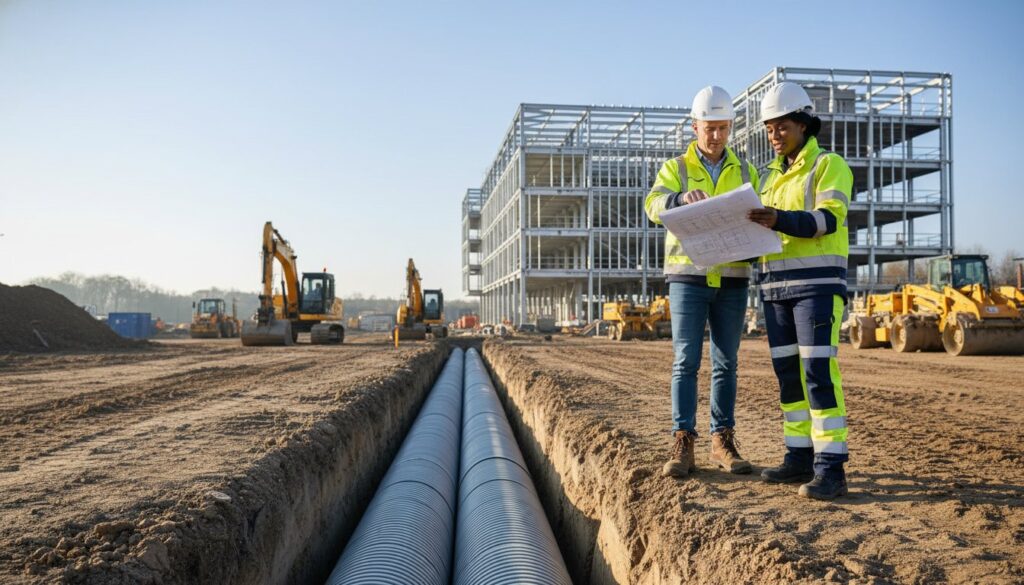
What if the most expensive element of your commercial development isn’t the superstructure, but a single non-compliant drainage connection that delays your S104 adoption by 24 weeks? You already know that sub-surface infrastructure is the silent heartbeat of any site, yet it remains the most common source of unexpected costs and regulatory friction. Finding the right drainage contractors developers can rely on is often the difference between a project that stays on track and one that sinks into a cycle of remedial works and missed deadlines.
This professional guide from GCS Contractors Ltd delivers a clear roadmap for site managers to implement high-standard infrastructure that meets every UK building regulation and water authority requirement. We’ll show you how to achieve fixed-price certainty and long-term reliability through meticulous site preparation and disciplined project management. From deciphering the nuances of S106 agreements to ensuring your site is ready for adoption, we provide the technical rigor needed to keep your commercial project moving forward with absolute confidence.
Key Takeaways
- Understand why integrating drainage systems during the earliest enabling works is critical for the long-term compliance and structural integrity of commercial projects.
- Learn the essential legal and practical distinctions between surface water, foul water, and SuDS to ensure your development meets modern UK environmental standards.
- Discover how to evaluate professional drainage contractors Cambridge based on their technical expertise in deep drainage and complex civil engineering rather than just initial cost.
- Gain a clear overview of the installation lifecycle, from initial site preparation and strip-out services to the final infrastructure connection.
- Explore the risk-reduction benefits of a turnkey approach, combining drainage, roadworks, and foundations with a single, dedicated groundworks partner.
Navigating Commercial Drainage Requirements in the UK
Modern commercial construction relies on robust, high-capacity drainage systems that do more than just move water. These systems form the backbone of a site’s infrastructure, supporting everything from structural stability to environmental health. Unlike domestic repairs that focus on localised issues, commercial projects require the installation of extensive networks capable of handling industrial-scale waste and significant surface water runoff. Our team delivers these solutions with a focus on long-term reliability and site safety.
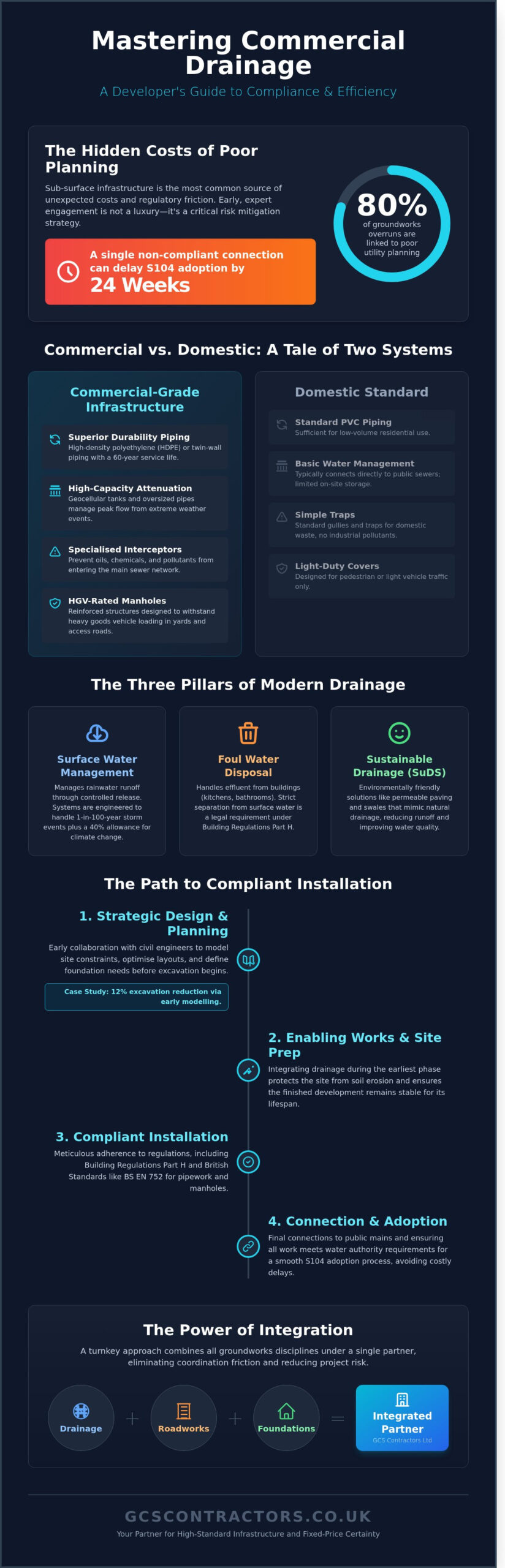
We believe drainage must be a priority during the earliest enabling works phases. Neglecting this leads to major setbacks; industry data suggests that approximately 80% of groundworks overruns are linked to poorly planned subterranean utilities. By engaging professional drainage contractors Cambridge at the start, developers secure a safe pair of hands to manage the transition from raw site to build-ready plot. This early intervention protects the site from soil erosion and ensures that the finished development remains stable for its entire operational lifespan.
The difference between commercial and domestic infrastructure is primarily one of scale and regulation. Commercial sites often require:
- High-density polyethylene (HDPE) or twin-wall piping for superior durability.
- Sophisticated attenuation tanks to manage peak flow rates during heavy rainfall.
- Specialised interceptors to prevent oils and chemicals from entering the main sewer network.
- Reinforced manhole structures designed to withstand heavy goods vehicle (HGV) loading.
Understanding Regulatory Compliance and Standards
Compliance isn’t optional in the UK construction sector. Every commercial project we undertake adheres strictly to Building Regulations Part H, which governs drainage and waste disposal. We also implement British Standards such as BS EN 752 to ensure that all pipework and manhole construction can withstand the heavy loading typical of commercial environments. Our specialists work directly with the Environment Agency to manage site discharge, ensuring that runoff meets the required quality standards before entering local water systems. This meticulous approach eliminates the risk of legal complications and environmental fines.
The Strategic Importance of Early-Stage Planning
Strategic drainage design directly influences foundation choices and overall groundworks costs. When we collaborate with civil engineers during the design phase, we identify site constraints like high water tables or soil instability before any excavation begins. On a recent project in the East of England, early-stage modelling allowed us to adjust the site layout to reduce total excavation volume by 12%, saving the client significant time and capital. This level of foresight allows drainage contractors Cambridge to optimise the site for both performance and budget, providing a turnkey solution that supports the broader construction objectives.
Modern Drainage Solutions: Surface Water, Foul Water, and SuDS
Effective site management starts with the strict separation of surface and foul water systems. This isn’t just a best practice; it’s a legal requirement under the Building Regulations Part H. As experienced drainage contractors Cambridge businesses rely on, we ensure that clean rainwater doesn’t overwhelm treatment plants by mixing with effluent. Modern infrastructure now utilises high-performance materials like twin-wall HDPE, which provides a 60-year service life and superior chemical resistance compared to legacy vitrified clay pipes used in the mid-20th century.
Engineering standards have evolved to handle the increased volatility of UK weather. We now design systems to accommodate 1-in-100-year storm events plus a 40% allowance for climate change. This rigorous approach prevents the structural damage and business interruption associated with flash flooding. If you’re managing a new build or a major refurbishment, our team can provide a site-specific drainage assessment to ensure your project remains compliant and future-proof.
Surface Water Management and Attenuation
We implement surface water drainage solutions that prioritise controlled release back into the environment. For a typical 2-hectare commercial site, this often involves installing geocellular attenuation tanks or oversized pipework to store up to 600 cubic metres of water during peak rainfall. Professional attenuation tank installation requires precise engineering to ensure compliance with local water authority requirements and long-term structural integrity. Key components of our surface water strategies include:
- Attenuation Tanks: Modular crates that store excess water and release it at a pre-agreed “greenfield” rate.
- Permeable Paving: Surfaces that allow water to infiltrate the ground directly, reducing the load on the main sewer.
- Catchpit Manholes: Essential for trapping silt and debris before they enter the attenuation system.
Foul Water Infrastructure and Pumping
Designing foul water systems requires precise calculation of flow rates and falls. We ensure a minimum velocity of 0.75 metres per second to keep solids in suspension and prevent blockages. While gravity-fed systems are the gold standard, topographical constraints in the Cambridgeshire landscape often necessitate the installation of drainage pumping stations. Our engineers manage the entire Section 106 application process, ensuring that your connection to the Anglian Water network meets all technical specifications and adoption standards.
Implementing Sustainable Drainage Systems (SuDS)
Following the 2024 implementation of Schedule 3 of the Flood and Water Management Act 2010, SuDS are now mandatory for almost all new UK developments. These natural solutions, such as swales and detention basins, do more than just move water. They filter pollutants and improve local water quality by up to 70% before discharge. As drainage contractors Cambridge developers trust, we integrate bio-retention areas into site layouts to boost biodiversity credits while meeting strict planning conditions. These systems mimic natural water cycles, reducing the pressure on urban infrastructure and creating greener, more attractive commercial environments.
Selecting a Drainage Contractor: Capability and Compliance
Selecting drainage contractors Cambridge based solely on the lowest quote often results in project delays and escalating costs. We focus on technical durability and long-term value. A successful installation requires a partner who understands the specific geotechnics of the Cambridgeshire region, where soil conditions can vary significantly within a few miles. You must evaluate a contractor’s track record with deep drainage, especially projects exceeding 3 metres in depth that require complex trench shoring and dewatering strategies.
We believe professional plant ownership is a key indicator of reliability. Contractors who own and maintain their own fleet of 360-degree excavators and laser-levelling equipment aren’t at the mercy of third-party hire availability. This ownership model reduces the risk of the 10 to 14-day delays often seen when hire companies face equipment shortages during peak construction periods. It ensures that the specific tools required for precision falls and pipe bedding are always ready for deployment.
Safety is the foundation of every site we manage. Reputable drainage contractors Cambridge prioritise a rigorous health and safety culture over mere box-ticking. We conduct daily briefings on Risk Assessments and Method Statements (RAMS) before any excavation begins. This disciplined approach protects your site’s integrity and ensures the project remains compliant with the Construction (Design and Management) Regulations 2015. For a comprehensive evaluation framework to assess potential partners, our detailed commercial drainage Cambridge contractor selection checklist provides the technical criteria needed to make an informed decision.
Essential Accreditations and Safety Standards
Compliance provides the legal and professional framework for every commercial project. We maintain active memberships in Safety Schemes in Procurement (SSIP) including CHAS and SMAS. Every operative on our sites holds a valid CSCS card, while plant operators are CPCS-qualified to ensure technical competence. We back this expertise with £10 million in public and employer liability insurance, providing a robust safety net for your investment and our workforce.
Project Management and Communication
Success depends on meticulous coordination and clear communication. We assign a dedicated site foreman to every project to act as your primary point of contact. This lead manages site logistics, ensuring that material deliveries, such as 150mm twin-wall piping or pre-cast concrete manholes, arrive exactly when the programme requires them. Our team works seamlessly with other site trades to prevent drainage works from becoming a bottleneck, providing weekly progress reports to keep all stakeholders informed of key milestones.
The Installation Lifecycle: From Enabling Works to Final Connection
Successful drainage projects begin long before the first pipe is laid. We manage the entire lifecycle, starting with essential enabling works and site strip-outs that clear the path for new infrastructure. For commercial redevelopments in Cambridge, where roughly 65% of projects involve brownfield sites, this initial phase ensures that old, redundant systems don’t compromise new installations. Our team delivers a seamless transition from demolition to groundworks, maintaining momentum on tight construction schedules.
The transition from site preparation to pipework requires meticulous planning. As expert drainage contractors Cambridge developers choose for complex builds, we focus on the precision of the bedding and backfilling process. Using the correct granular material prevents pipe deformation and ensures the system handles the structural loads of heavy commercial traffic. We follow a disciplined sequence to ensure every component meets the required gradients and alignments.
Excavation and Trenching Best Practices
Ground conditions in East Anglia vary significantly, ranging from heavy Gault Clay to sandy pockets with high water tables near the River Cam. Precision is vital during excavation. Any trench deeper than 1.2 metres requires robust shoring or trench boxes to protect personnel and maintain site integrity. We use laser-guided equipment to maintain falls as precise as 1:80, which prevents future sediment build-up. Our team minimises disruption by using targeted excavation techniques, often reducing surface impact by 40% compared to traditional wide-trench methods.
Testing, Inspection, and Adoption
Quality assurance is a non-negotiable part of our delivery. Before any project reaches handover, we conduct rigorous air or water pressure tests to BS EN 1610 standards. As leading drainage contractors Cambridge firms rely on, we perform 100% of our final inspections using high-definition CCTV surveys. This provides a clear digital record of the pipework’s condition and integrity. For systems destined for public use, we prepare all necessary documentation for Section 104 adoption by Anglian Water. This ensures the local water authority accepts the asset without administrative delays or costly remedial works.
Secure a reliable partner for your next infrastructure project by exploring our commercial drainage services.
Integrated Groundworks: Why a Turnkey Approach Matters
Managing a commercial site in East Anglia requires a meticulous approach to civil engineering. When you engage our groundworks specialists in Cambridge, you eliminate the friction that often exists between separate trades. A turnkey model ensures that the drainage system, foundations, and roadworks function as a single, cohesive unit. This integrated strategy reduces the risk of underground services being damaged by subsequent excavation work, a common issue that accounts for roughly 25% of site delays in UK commercial developments. GCS Contractors Ltd acts as a safe pair of hands, overseeing every technical detail from the initial dig to the final BWIC (Builders Work in Connection).
Seamless Transitions Between Construction Phases
Project timelines often suffer when multiple contractors compete for site space or plant machinery. By centralising these services, we ensure that plant equipment like 360 excavators and dumpers remain on-site for consecutive tasks; this can reduce total hire costs by up to 15%. Our team manages the logistics of road surfacing and drainage installation simultaneously to prevent the scheduling conflicts that typically stall progress. We maintain a high level of consistency in quality across all civil engineering tasks, ensuring that every pipe run and foundation slab meets the same rigorous building standards.
Partnering with GCS Contractors Ltd for Your Next Project
Our reputation is built on 12 years of delivering high-quality, cost-effective infrastructure solutions across Cambridgeshire. We don’t just act as a service provider; we’re a dedicated partner focused on long-term results. Our team provides fixed-price tenders to give you financial certainty from the outset. This transparency is why 88% of our commercial clients return for future phases of their development. Whether you need expert drainage contractors Cambridge or comprehensive site preparation, we deliver the technical credibility your project demands.
Finalising a project involves more than just burying pipes. We handle the critical finishing touches that ensure long-term durability, including:
- Road Surfacing: Professional asphalt and macadam finishes designed to withstand heavy commercial traffic loads.
- BWIC: Managing all builders’ work in connection to ensure utility entries are sealed, compliant, and structurally sound.
- Infrastructure Handover: Providing comprehensive documentation and safety certifications for every element of the groundworks and drainage system.
By choosing an integrated approach, you secure a streamlined path to project completion. We take pride in navigating the complexities of the built environment so you don’t have to. Our disciplined team ensures that your site infrastructure is safe, efficient, and built to stand the test of time.
Securing the Future of Your Cambridge Commercial Infrastructure
Managing commercial drainage requires more than just digging trenches. It demands a rigorous understanding of SuDS regulations and the technical precision to handle foul and surface water systems simultaneously. When you integrate these groundworks into a single turnkey package, you eliminate the logistical friction that often delays large-scale developments. Choosing experienced drainage contractors Cambridge ensures your project meets every compliance standard from the first enabling works to the final S278 highway connection.
GCS Contractors brings over 10 years of industry experience to every site. Our team maintains comprehensive SSIP and safety accreditations, providing the technical credibility needed for complex infrastructure works. We focus on delivering tangible results that stand the test of time, acting as a disciplined partner for your build. We’ve built our reputation on being a safe pair of hands for developers across the region. Contact GCS Contractors for a professional drainage and groundworks tender to discuss your next project’s requirements. We’re ready to help you navigate the complexities of your site’s infrastructure with confidence and precision.
Frequently Asked Questions
What is the difference between Section 104 and Section 106 drainage agreements?
A Section 104 agreement facilitates the formal adoption of new sewers by a water company, while a Section 106 agreement grants the legal right to connect to an existing public sewer. Under Section 104, the developer builds the infrastructure to specific standards so the water authority can take over long-term maintenance. Section 106 involves an application process with fees typically ranging from £350 to £1,200 depending on the complexity of the connection to the main network.
How much does it cost to install a commercial drainage system in the UK?
Commercial drainage installations generally cost between £250 and £650 per linear metre for standard pipework and excavation. For a mid-sized commercial site, total project budgets often range from £30,000 to £160,000. As established drainage contractors Cambridge firms trust, we provide fixed-price tenders based on specific topographical data and soil conditions. These costs include materials, labour, and the construction of essential manholes or inspection chambers.
Do I need a pumping station for my commercial development?
You’ll require a pumping station if your site’s elevation is lower than the main sewer line, making gravity-led drainage impossible. This is common in developments with basement levels or sites situated on sloped terrain. A standard commercial package pump station starts at approximately £5,500 for the unit itself. Our engineers assess your site levels to determine if a bespoke pumping solution is necessary to ensure efficient foul water management.
How long does a typical commercial drainage installation take?
A typical installation for a commercial project takes between 3 and 7 weeks to complete. Small-scale connections might wrap up in 4 days, whereas extensive infrastructure for a new warehouse can last 14 weeks. The timeline depends on the depth of the dig and the prevailing weather conditions. We deliver a detailed programme of works to ensure your project remains on schedule and hits every critical milestone.
What are the legal requirements for SuDS on new construction sites?
Schedule 3 of the Flood and Water Management Act 2010 requires almost all new developments in England to incorporate Sustainable Drainage Systems (SuDS). These systems must manage surface water runoff to match greenfield rates, preventing local sewer sets from becoming overwhelmed. Regulations demand that developers use attenuation tanks, soakaways, or permeable surfaces. We ensure every design meets the 2024 local planning authority requirements for flood resilience and environmental compliance.
Can a groundworks contractor handle both foul and surface water drainage?
A specialist groundworks contractor can manage both foul and surface water systems to provide a turnkey infrastructure solution. This integrated approach prevents the risk of cross-connection and simplifies the project management process. As drainage contractors Cambridge developers rely on, we install both systems simultaneously to reduce site time. Our team ensures all pipework complies with Building Regulations Part H and the specific requirements of the local water authority.
Why is a CCTV drain survey necessary after a new installation?
A CCTV survey is essential to confirm that the new pipes are free from structural defects or construction debris like mortar and silt. It provides a high-definition record that the installation matches the approved design drawings exactly. Water companies require a clean survey report before they’ll agree to adopt the sewers under a Section 104 agreement. This survey acts as your final quality check, ensuring the system’s longevity and performance.
What insurance should a drainage contractor have for commercial work?
A reputable contractor must carry a minimum of £5 million in Public Liability insurance and £10 million in Employers’ Liability insurance. We also maintain Professional Indemnity insurance to protect the technical integrity of our drainage designs. These policies provide essential financial security against accidental damage or site incidents. You should always check for valid CHAS or Constructionline Gold accreditations to verify that your partner operates under strict safety and legal frameworks.