Two asbestos surveys every UK dutyholder must know
UK law recognises two formal asbestos survey types under HSG264: the management survey and the refurbishment and demolition (R&D) survey. A management survey suits buildings in normal occupation and feeds your asbestos register. An R&D survey is mandatory before any intrusive refurbishment or demolition work begins, because it involves fully invasive access that a management survey never attempts.
TL;DR:
- A management survey is suitable for buildings in normal occupation but becomes inadequate once structural work or demolition is planned.
- R&D surveys are fully intrusive and destructive, requiring area vacating and covering the entire building or specific zones depending on project scope.
- Ensuring survey competence involves UKAS accreditation, following HSG264 methodology, and samples analyzed by accredited labs, especially for demolition work.
- Accurate commissioning requires clear scope definition, including boundaries, access, and reporting expectations, with costs and timescales varying by survey type.
- Post-survey, updating the asbestos register and management plan is essential for safe contractor briefing, work planning, and maintaining compliance records.
Table of Contents
- What is a management survey and when do you need one?
- What does a refurbishment and demolition survey actually involve?
- When is each survey legally required?
- How do you check a surveyor is actually competent?
- Commissioning a survey: scope, access, sampling and timescales
- What happens after the survey report lands?
- Planning surveys into the demolition sequence
- Planning demolition or refurbishment? Start with the right survey
- Where to check the detail yourself
- Sources
What is a management survey and when do you need one?
A management survey identifies asbestos-containing materials (ACMs) likely to be disturbed during everyday occupation, cleaning, and routine maintenance. It is the baseline survey almost every non-domestic building in the UK needs, and it directly supports the statutory premises management obligations that apply to anyone responsible for maintaining commercial premises.
The scope is deliberately non-intrusive. Surveyors inspect accessible areas, assess the condition of any ACMs found, and take samples only where visual identification is not conclusive. HSENI notes that sampling is common practice in both survey types, so do not assume a management survey means no lab work at all, as detailed in its asbestos surveys guidance.
A management survey typically produces:
- An asbestos register listing every identified or presumed ACM by location
- Condition assessments flagging materials that need monitoring or immediate attention
- A management plan setting out control measures and review intervals
- Recommendations on which areas need a follow-up R&D survey before any future works
If your building is staying in occupation with no structural changes planned, a management survey is usually sufficient. The moment you plan to break into walls, lift flooring, or demolish anything, that survey stops being adequate on its own.
What does a refurbishment and demolition survey actually involve?
An R&D survey is a different exercise entirely. Rather than checking what is visible, surveyors locate and describe every ACM that could exist within the fabric of the area being worked on, or the entire building if demolition is planned. That means opening up cavities, lifting floor coverings, inspecting ceiling voids and service ducts, and taking destructive samples from places a management survey would never touch.
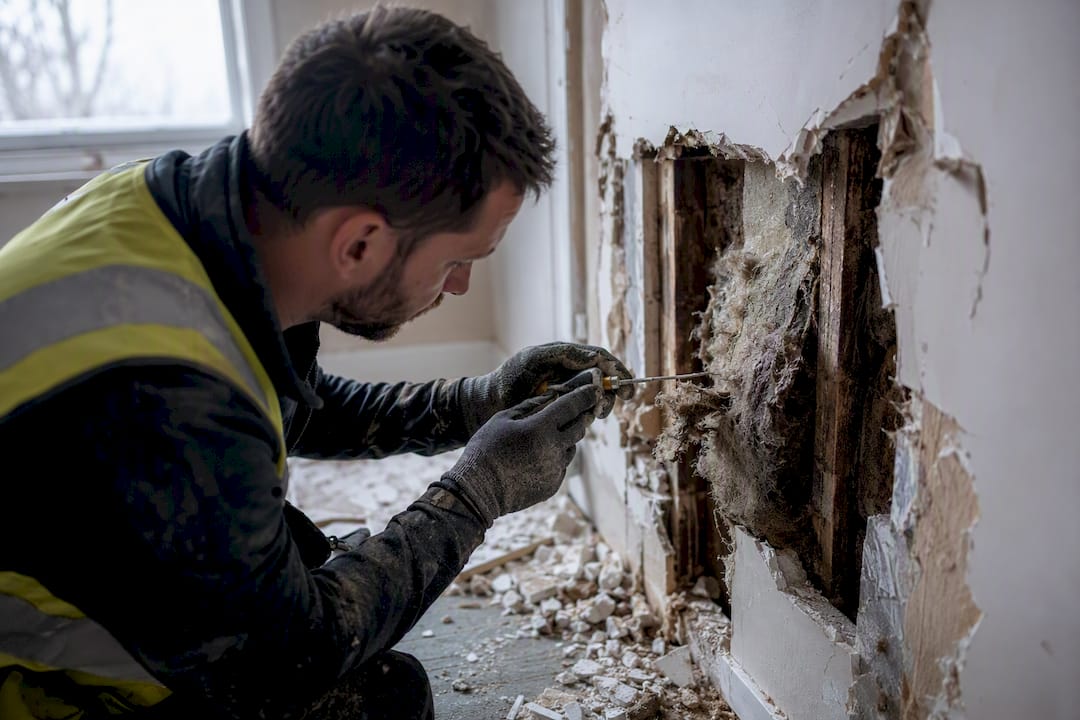
Scope matters enormously here. UKATA’s HSG264 guidance warns that confusion often arises from the outdated “Type 1/2/3” terminology; the modern framework has just two survey types, and the brief given to the surveyor must state precisely what work is planned, as set out in HSG264’s survey methodology. A refurbishment-limited R&D survey covers only the floor or zone due for alteration. A demolition-scoped R&D survey must explicitly cover the whole structure, a distinction detailed by AsbestosSurveyFinder’s guide to R&D surveys. A survey scoped to one floor does not legally authorise demolishing the entire building.
Because the inspection is destructive, areas usually need to be vacated while work takes place, often under containment, and the surveyor should issue a fit-for-reoccupation confirmation once sampling and inspection are complete.
| Feature | Management survey | R&D survey |
|---|---|---|
| Intrusiveness | Non-intrusive, visual | Fully intrusive, destructive |
| Typical trigger | Normal occupation, maintenance | Planned refurbishment or demolition |
| Access needed | Accessible areas only | Cavities, voids, service runs |
| Occupancy during survey | Building stays occupied | Areas usually vacated |
| Key output | Asbestos register, management plan | Detailed ACM location report, reoccupation sign-off |
When is each survey legally required?
The Control of Asbestos Regulations 2012 places a legal duty on anyone responsible for non-domestic premises to manage the risk from asbestos, and HSE’s own guidance is explicit that a management survey is the minimum expectation for occupied buildings. Where refurbishment or demolition is planned, HSE guidance treats an R&D survey as a precondition, not an option. You cannot rely on an old management survey to authorise intrusive works.
If your project falls under CDM 2015, there is a further obligation: pre-construction information, including any relevant asbestos survey findings, must be passed to designers and principal contractors before design and construction decisions are finalised.
Your immediate duties as dutyholder are straightforward in principle, harder in practice:
- Brief the surveyor accurately on the intended works
- Commission only competent surveyors and accredited laboratories
- Keep written records of every survey, register update, and management plan revision
- Update pre-construction information whenever new survey data emerges
How do you check a surveyor is actually competent?
Hiring on price alone is one of the most common ways dutyholders end up with an inadequate survey, and it is the client, not the surveyor, who carries the legal exposure when things go wrong. A handful of checks reduce that risk considerably.
- Confirm the surveying firm holds UKAS accreditation for the survey type you need.
- Ask whether their methodology follows HSG264, and request evidence of comparable R&D or demolition-scoped projects.
- Check that samples are analysed by a UKAS-accredited laboratory, not an in-house or unaccredited facility.
- Request an example report and confirm it includes location plans, sample results, and clear recommendations.
- Verify professional indemnity insurance and ask how chain-of-custody is documented for samples.
- For demolition work, ask directly whether the surveyor has experience with destructive inspection, since not every management surveyor is comfortable opening structural voids.
Pro Tip: Ask to see a redacted sample report before you commission anything. A vague register with “presumed ACM, further investigation recommended” scattered through every line is a sign the previous survey was rushed, and you will likely need a second one anyway.
Commissioning a survey: scope, access, sampling and timescales
The brief you give a surveyor decides the quality of everything that follows. State plainly whether the building is remaining in general use, undergoing refurbishment in a defined area, or being demolished in full. Ambiguity here is exactly what leads to a survey being scoped too narrowly for the actual works, forcing a second visit later.
A commissioning brief should cover:
- The intended works and their exact boundaries, including any excluded areas
- Access and vacating arrangements, particularly for R&D surveys requiring destructive inspection
- Reporting requirements: location plans, sample results, the asbestos register, and prioritised recommendations
- A realistic allowance for laboratory turnaround, which can add several working days to the programme
Timescales and costs vary sharply between the two survey types. A management survey on a modest commercial unit is usually quicker and cheaper than an R&D survey on the same building, because R&D work needs more site time, more samples, and more lab analysis. AsbestosSurveyFinder’s 2026 cost guidance sets out representative price ranges by property size, and it is worth requesting a fixed quote against your specific brief rather than a generic per-square-metre estimate.
What happens after the survey report lands?
The register and management plan are not filing-cabinet documents. Use them to brief contractors before any maintenance work, and update the management plan every time a condition changes or an area is remediated.
Where ACMs are confirmed, removal method depends on the material: some work needs a licensed contractor, while lower-risk materials can sometimes be handled by a trained non-licensed operative. Either way, removal needs to sit explicitly in your project programme, not be squeezed in afterwards.
- Update CDM pre-construction information the moment new survey findings arrive
- Brief every contractor working near identified ACMs before they start
- Insist on formal fit-for-reoccupation confirmation after any intrusive R&D survey
- Retain every version of the register and management plan as your compliance record
Planning surveys into the demolition sequence
Commission surveys early. Every demolition programme I have seen slip has the same root cause: an R&D survey ordered after the schedule was already set, rather than before pricing began.
Match scope to the actual works. A refurbishment-limited survey is cheaper but only covers what it says on the brief, so specify full demolition scope the moment that is genuinely the plan. Contractors who plan destructive inspection properly, sequencing access and containment before sampling starts, get through this stage with far less disruption than teams treating it as an afterthought bolted onto week one.
— George
Planning demolition or refurbishment? Start with the right survey
Getting the survey brief right the first time saves weeks later. Gcscontractors works on strip-out, demolition, and enabling works across Cambridge and East Anglia, and one thing we see repeatedly is projects delayed because an R&D survey was scoped too narrowly for the works actually planned. We help clients translate survey findings, whether that is a register flagging ACMs in a ceiling void or a full demolition-scoped report, into a safe, sequenced programme that does not stall halfway through.

If you are planning demolition or major refurbishment and need the survey outputs turned into a workable site sequence, our demolition sequence breakdown sets out how we integrate pre-demolition checks into the programme. Get in touch to talk through your project and get a firm quote for the enabling works that follow your survey.
Where to check the detail yourself
For the legal framework, read HSE’s guidance on arranging surveys. For methodology, consult HSG264. For commissioning and reporting standards, see the RICS professional standard.
This article is general information, not a substitute for advice from a qualified doctor. Consult a qualified healthcare professional about your own circumstances before acting on anything here.
Sources
- The duty to manage asbestos in buildings: Arrange an asbestos survey – HSE
- HSG264 — Asbestos: The survey guide (UKATA / HSE guidance)
- Asbestos professional standard (RICS 2023)
- Refurbishment and Demolition Asbestos Survey (R&D): Requirements, Costs & Process (2026) | AsbestosSurveyFinder