Top mistakes in strip-outs that cost tenants time and money
The top mistakes in strip-outs almost always trace back to ten failures: skipping asbestos surveys, hidden services no one checked for, unlicensed contractors, poor waste planning, scope creep, sequencing gaps, no structural survey, rushed fire certification, weak RAMS, and vague lease obligations. Each one has a direct fix, and most cost nothing to implement.
- Hidden services missed – commission a full services survey before quoting.
- Late planning – start the make-good conversation the day the lease review begins.
- Unlicensed contractors – demand licence and insurance certificates before signing.
- Poor waste planning – agree waste segregation and carrier registration up front.
- Scope creep – fix scope in writing with a variation clause for extras.
- Sequencing gaps – phase trades so nobody meets a live service unprepared.
- No structural survey – commission one separately from the asbestos survey.
- Rushed fire certification – sequence “open, close, inspect, certify” throughout.
- Weak RAMS – reject generic method statements not written for the site.
- Unclear lease terms – pin down make-good obligations before work starts.
Mesothelioma still kills. The 2025 HSE mortality report recorded 2,218 mesothelioma deaths in Great Britain in 2023, almost all from historical asbestos exposure. That single figure is why asbestos clearance is never a step to shortcut.
Key Takeaways
Successful strip-outs depend on early lease review, a proper asbestos survey, licensed contractors, phased sequencing, and staged sign-off backed by documentary evidence.
| Point | Details |
|---|---|
| Survey before quoting | Commission asbestos and structural surveys separately, both before tender. |
| Fix scope in writing | Lock lease make-good obligations and scope into the contract early. |
| Sequence trades and certification | Phase work and certify fire systems throughout, not in the final week. |
| Vet contractors on paper | Require licences, insurance, and site-specific RAMS before mobilisation. |
| Gcscontractors manages the risk | Gcscontractors coordinates surveys, sequencing, and certification as one managed strip-out programme. |
Table of Contents
- Detailed breakdown of the most common strip-out mistakes
- Safety and compliance you cannot skip
- Choosing contractors: credentials and the questions that expose weak ones
- Where the money actually leaks
- Getting handback sign-off right the first time
- How Gcscontractors reduces handback risk on your strip-out
- Frequently asked questions
- Sources
Detailed breakdown of the most common strip-out mistakes
1. Hidden services nobody surveyed
Live electrics behind a partition, water pipework in a false ceiling void, data cabling nobody documented. These surface mid-strip and stop the crew cold. Commission a full services survey before tender, involve the landlord’s facilities team early, and require the contractor to price a contingency line specifically for undocumented services.
2. Planning that starts too late
Tenants often begin thinking about strip-out weeks before lease expiry rather than months. That compresses every other decision. Start the make-good conversation as soon as break clauses or expiry dates are confirmed, request the landlord’s reinstatement schedule in writing, and build the programme backwards from the handback date.
3. Unlicensed or underinsured contractors
Cheap quotes from unlicensed teams create liability the tenant carries, not the contractor. Verify asbestos licences, check public liability limits against the building’s value, and confirm waste carrier registration before mobilisation.
4. Poor waste planning
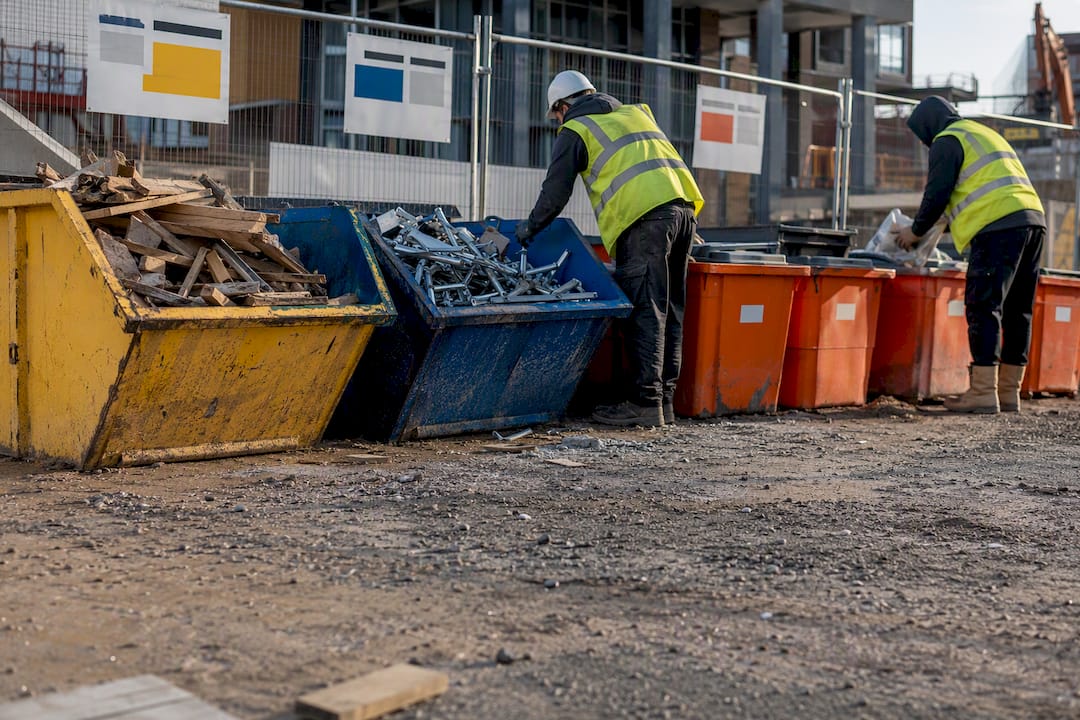
Skips arrive too small, mixed loads attract hazardous waste surcharges, and carriers without proper registration create legal exposure for the tenant. Segregate waste streams from day one and agree disposal routes contractually, a point echoed in most step-by-step strip-out planning guides.
5. Scope creep with no contractual brake
“While we’re in there” additions balloon budgets fast. Fix the scope in the contract, require written variation approval for anything beyond it, and negotiate hard on what the lease actually obliges you to remove rather than what looks tidy.
6. Sequencing gaps between trades
When general strip-out crews and specialist trades aren’t phased correctly, crews hit live services or certified systems and have to down tools, generating idle time nobody budgeted for. A phased demolition sequence prevents this collision entirely.
7. No structural survey
An asbestos survey is not a structural survey. Skipping the latter risks accidental damage to load-bearing elements once partitions and ceilings come out, a distinction HSE guidance treats as two separate legal duties.
8. Fire certification left until the last week
Fire and life-safety systems need formal recertification after modification. Leaving this until handback week routinely causes failed inspections and delayed release of retained items.
9. Thin RAMS
Generic method statements copied from another job miss the hazards specific to this site. Insist on RAMS written for the actual building.
10. Unclear lease and make-good clauses
Vague wording on “reinstatement to original condition” is where most disputes start. Get every obligation confirmed in writing before demolition begins.
Pro Tip: Arrange one joint walk-through with the landlord and, where fire systems are involved, their fire consultant, before tender. This single visit routinely removes work packages nobody actually needed, cutting both programme and cost.
Safety and compliance you cannot skip
Asbestos clearance and signed-off RAMS come before general operatives set foot on site. There is no sequence where this happens later.
The controls that matter: a proper asbestos survey commissioned and retained by the dutyholder, licensed abatement where asbestos is confirmed, and a clearance certificate before demolition crews return. HSE guidance on soft strip demolition sets dust control as water suppression or on-tool extraction first, with respiratory protective equipment (RPE) as the secondary layer, and specifies a minimum assigned protection factor sufficient for high-level respiratory protection, meaning appropriate high-grade respiratory filters.
HSE data recorded 2,218 mesothelioma deaths in Great Britain in 2023 from historical asbestos exposure. That is the entire justification for treating clearance certificates as non-negotiable rather than paperwork.
Fire and life-safety certification should follow “open, close, inspect, certify” through the programme, not as a last-minute scramble. Fire safety compliance guidance treats deferred certification as a recurring cause of handback failure.
Choosing contractors: credentials and the questions that expose weak ones
Check licences (asbestos removal specifically, where relevant), current insurance certificates, PASMA or equivalent training records, and waste carrier registration before any contract is signed.
Ask these at interview:
- What comparable buildings have you stripped out in the last two years?
- Can you walk me through your sequencing plan for this site?
- What is your asbestos clearance process, step by step?
- Can I see a RAMS example written for a similar building?
- Who can I contact as a reference?
- How do you segregate and dispose of waste streams?
Red flags: RAMS that never mentions this specific site, references that don’t check out, insurance that looks thin against the building’s value, or reluctance to sign a site-specific method statement. Before mobilisation, require clearance certificates, permits, and current insurance documents in hand, not promised later. Our contractor questions guide covers the full interview list in depth.
Where the money actually leaks
- Discovery work once ceilings and partitions open up.
- Specialist re-visits for electrics or fire systems missed first time.
- Waste surcharges from unsegregated or hazardous loads.
- After-hours labour when handback runs late.
- Premium testing and certification booked last-minute.
Contingency should scale with risk: modest for a simple, well-documented office fit-out, higher for older buildings with unknown services history, and highest where asbestos presence is suspected but unconfirmed. Use staged payments with holdbacks until documentation is supplied, not full payment on completion alone. Accurate surveys and early landlord negotiation shrink expected contingencies and shorten the strip-out programme considerably. Track costs daily against interim sign-offs, with variation clauses triggered before, not after, extra work happens.
Getting handback sign-off right the first time
Build a final checklist: asbestos, electrical and fire clearance certificates, a full photographic record, waste transfer notes, a signed snag list, and a dated sign-off from the landlord or building manager. Tag photographs against the specific lease clause or make-good requirement each one evidences.
- Stage sign-offs through the programme rather than pushing everything into the final week.
- Reference each item on the sign-off template back to its original lease clause.
- List retained items separately so there’s no ambiguity at handback.
Pro Tip: A sign-off document that maps directly to lease wording is far harder for a landlord to dispute than a generic completion certificate.
What years of strip-out projects actually teach you
The lesson that repeats across almost every project: early scope negotiation and correct sequencing save more time and money than any amount of on-site heroics later. Gcscontractors sees this pattern often enough to build it into how every programme starts.
How Gcscontractors reduces handback risk on your strip-out
A strip-out that goes wrong rarely fails on-site. It fails weeks earlier, when nobody surveyed properly or booked asbestos clearance early enough to keep the programme moving. Gcscontractors runs strip-out projects around exactly the failure points covered above: a full site survey before quoting, coordinated asbestos clearance, phased sequencing that keeps trades out of each other’s way, structured waste management, and fire and life-safety certification built into the programme rather than bolted on at the end.

This is a service for commercial tenants, landlords, and developers managing lease obligations, not a DIY strip-out kit. If a handback date is approaching or a lease review has just started, request a site survey and quote for your strip-out procedure now while there’s still time to sequence the work properly rather than scramble at the end.
Frequently asked questions
What is the single most expensive mistake in a strip-out project?
Skipping the site survey stage. Hidden services and undocumented structural elements discovered mid-strip cause the largest, least predictable cost overruns.
Do I need a separate structural survey if I’ve already done an asbestos survey?
Yes. An asbestos survey and a structural survey cover entirely different risks, and treating them as one step is a common cause of accidental damage during strip-out.
How early should strip-out planning start before lease expiry?
As soon as the break clause or expiry date is confirmed, ideally several months out, so surveys, contractor procurement, and asbestos clearance can happen without compressing the programme.
What should I check before hiring a strip-out contractor?
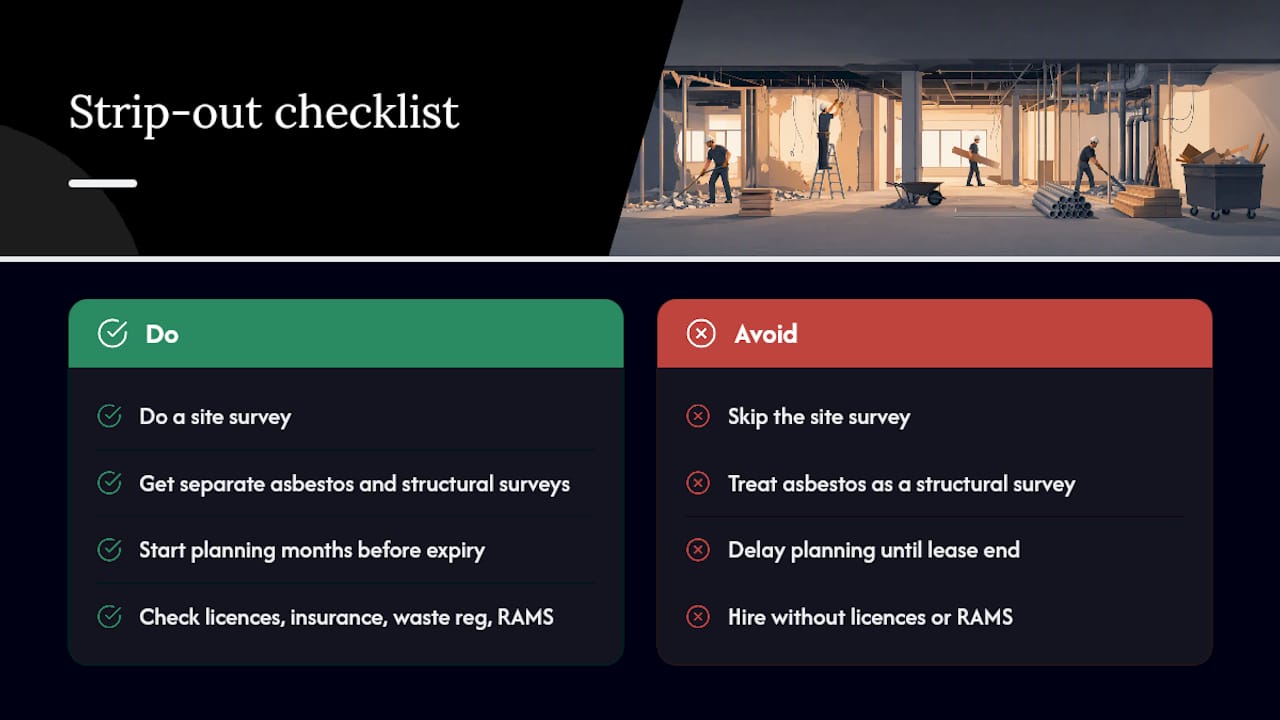
Licences (including asbestos removal where relevant), current insurance certificates, waste carrier registration, and RAMS written specifically for your building rather than a generic template.
Sources
- Mesothelioma and asbestosis mortality in Great Britain: 1968 to 2023
- Arranging an asbestos survey
- Step‑by‑step guide to planning a successful strip‑out project