Residential Drainage Systems: A Guide for Homeowners and Developers in Cambridge
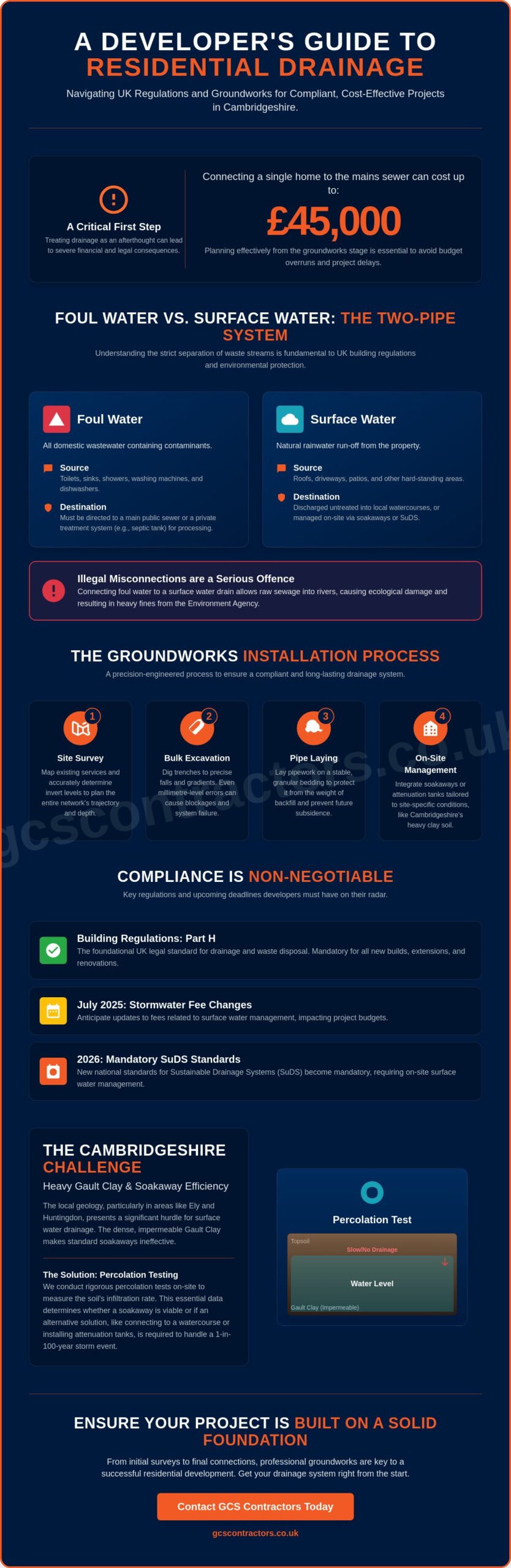
Connecting a single home to the mains sewer in 2026 can cost up to £45,000, yet many developers treat drainage as a secondary concern until the ground is already open. When you’re managing drainage systems residential projects in Cambridge, the margin for error is slim. With new national SuDS standards becoming mandatory in 2026 and local regulations updated as recently as 20 February 2026, getting the infrastructure right is a structural necessity. It’s the difference between a dry, compliant site and one plagued by damp, fines, or failed inspections.
We understand that navigating the divide between foul and surface water can be frustrating, especially when dealing with the heavy clay soils common across Cambridgeshire. This guide provides a clear roadmap for planning and installing domestic drainage that meets all UK building regulations and local requirements. You’ll learn how to manage the July 2025 stormwater fee changes, calculate installation costs like the £167 per foot average for sewer pipes, and ensure your site is ready for a seamless connection to the public network before the slab is poured.
Key Takeaways
- Distinguish between foul and surface water systems to prevent illegal misconnections and ensure compliant waste management on site.
- Learn how to plan drainage systems residential infrastructure effectively, from conducting site surveys to establishing precise falls through bulk excavation.
- Navigate the legal boundaries of property ownership by identifying the technical differences between private drains, lateral drains, and public sewer networks.
- Secure your project’s compliance with mandatory Building Regulations Part H and prepare for the 2026 SuDS standards for sustainable surface water management.
Understanding Domestic Drainage: Foul Water vs Surface Water Systems
Effective drainage systems residential networks are the invisible infrastructure that keeps a property dry and sanitary. At its core, residential drainage is a dual-purpose network designed to remove wastewater and stormwater from your site. Understanding the difference between these two streams is vital for any developer or homeowner. Foul water includes all waste from toilets, sinks, showers, and washing machines. Surface water refers strictly to rainwater that falls on your roof, driveway, and patio. Mixing the two isn’t just a technical error; it’s a legal and environmental risk.
Misconnecting a foul pipe to a surface water drain allows raw sewage to flow directly into local rivers and streams without treatment. This causes significant ecological damage and often leads to heavy fines from the Environment Agency. For a deeper look at the engineering principles involved, Understanding Drainage Systems provides a comprehensive overview of how these networks protect the built environment. From foundations to finishing, ensuring these systems remain separate is a priority for any compliant groundworks project.
The Two-Pipe System: Why Separation Matters
Modern UK construction relies on a two-pipe system to manage waste safely. Foul water is directed into the main public sewer for treatment at a dedicated plant. In more rural parts of Cambridgeshire, this waste might instead flow into a septic tank. Surface water remains untreated and is usually sent to local watercourses or managed on-site through soakaways. This separation prevents sewage treatment plants from becoming overwhelmed during heavy rainfall, which reduces the risk of floods in our local communities.
Historic Properties and Combined Drainage Challenges
Many pre-1970 properties in the centre of Cambridge still utilise combined drainage systems. These older builds use a single pipe to carry both sewage and rainwater. Whilst these systems were standard for the time, they are increasingly problematic. When you’re planning a modern extension or a large-scale renovation, you’ll often be required to modernise these connections. This usually involves installing new, separate runs to bring the property up to 2026 environmental standards. It’s a complex task that requires precise site preparation to ensure the new infrastructure integrates correctly with the existing Victorian or Edwardian pipes. Working with experienced drainage installation contractors in Cambridge who can conduct CCTV surveys of existing pipework is essential before committing to any modernisation plan.
Planning and Installing Residential Drainage: The Groundworks Perspective
Groundworks are the backbone of any successful build. For drainage systems residential projects, the process starts long before the pipes arrive on site. We begin with a detailed site survey to map existing services and determine invert levels. This data dictates the depth and trajectory of our bulk excavation. Precision here is non-negotiable. If the falls and gradients are off by even a few millimetres, the entire system risks standing water or frequent blockages. Following the UK Drainage Regulations ensures every trench and connection meets legal safety standards from the start.
Once we’ve established the levels, we lay the pipework on a precise granular bedding. This bedding protects the pipes from the weight of the backfill and prevents future subsidence. We then integrate attenuation features or soakaways tailored to the specific water table of your site. It’s a technical process that requires a “safe pair of hands” to ensure the infrastructure remains stable for decades. Partnering with an experienced civil engineering firm that uses modern tools and methodologies is essential to achieving this level of precision on complex residential projects.
Cambridgeshire Soil and Soakaway Efficiency
The heavy Gault Clay found in areas like Ely and Huntingdon presents a unique challenge for developers. Clay doesn’t drain well, which makes standard soakaways inefficient on many local plots. Before we choose between a soakaway or a cess pit, we conduct rigorous percolation tests. These tests measure how fast water infiltrates the soil. This data is essential to ensure your system can handle a 1-in-100-year storm event without backing up.
Key Components: From Gullies to Attenuation Tanks
Modern systems rely on more than just gravity. Inspection chambers, or manholes, are placed at every change of direction to allow for maintenance. Rodding eyes provide access for clearing blockages, whilst interceptors prevent oils from entering the main network. For high-density urban developments in Cambridge, we often install modular attenuation tanks. These tanks hold vast volumes of stormwater during peak rain, releasing it slowly into the network to prevent local flooding. If you’re starting a new build, our team can help you plan your site infrastructure with professional precision.
Responsibility, Regulations, and Professional Installation
Adhering to Building Regulations Part H is a mandatory requirement for any new build or extension project. These regulations specify the standards for drainage systems residential developers must implement to ensure efficient waste disposal and effective rainwater management. Failure to comply doesn’t just risk legal action; it leads to ground erosion and structural damp that can compromise the foundations of your property. Professional groundworks provide the technical accuracy needed to prevent these long-term structural failures, which general building work often misses.
Private vs Public Sewers: Who Pays for Repairs?
Defining the boundary of responsibility is vital when a fault occurs. A private drain is the section of pipework serving only your property within your boundary. You’re responsible for all maintenance and repair costs for this section. Once a pipe serves more than one home or crosses your boundary, it’s usually classified as a lateral drain or a public sewer. At this point, the local water company takes over responsibility. Understanding exactly who is responsible for blocked drains outside your property boundary can save you from unnecessary call-out fees and help you avoid costly disputes with your water provider. For projects in the city, following Cambridge Sustainable Drainage guidelines is often a planning requirement to ensure your private system doesn’t overwhelm the public network.
Why Specialist Groundworks Contractors are Essential
Achieving the correct pipe gradients requires more than just a spirit level. We use high-precision laser equipment to ensure 1-in-40 or 1-in-60 falls are maintained with millimetre accuracy. This precision prevents the silting and blockages common in poorly installed systems. As a CHAS Elite approved contractor, GCS Contractors Ltd ensures every installation is compliant, safe, and fully documented for building control. We manage the process from foundations to finishing, providing a “safe pair of hands” for your drainage systems residential requirements. Choosing GCS Contractors Ltd ensures your infrastructure is ready for the 2026 SuDS standards and the unique environmental pressures of the Cambridgeshire landscape. To ensure your project benefits from the latest construction methodologies, learn how to evaluate a civil engineering firm for your 2026 construction project before committing to a contractor.
Secure Your Site Infrastructure for the Future
Building a property on the right foundation requires more than just concrete. It demands a precise approach to drainage systems residential developers can trust for the long term. You’ve seen how separating foul and surface water prevents environmental fines, and how Cambridge clay dictates your soakaway strategy. Getting these details right during the groundworks phase prevents the ground erosion and structural damp that often plague poorly planned builds. With the national SuDS standards becoming mandatory in 2026, technical compliance is a vital structural necessity for any modern project.
GCS Contractors Ltd has served as specialists in Cambridge groundworks since 2017. We are an ISO 9001 certified and CHAS Elite approved contractor. We provide the technical expertise and laser-level accuracy required for a “safe pair of hands” on every project. From foundations to finishing, we ensure your site remains compliant and structurally sound. Contact GCS Contractors Ltd for professional drainage installation in Cambridge today. Let’s get your project moving with the professional momentum and high standards your development deserves.
Frequently Asked Questions
What is the difference between a drain and a sewer?
A drain is a pipe that serves only one property within its boundary. Once a pipe serves two or more properties, it’s classified as a sewer. Most shared sewers and lateral drains located outside property boundaries became the responsibility of water companies in October 2011. Understanding this distinction helps you determine who is liable for repair costs when issues arise in your drainage systems residential infrastructure.
How do I know if my residential drainage system is blocked or damaged?
You’ll notice slow-draining sinks, unpleasant odours, or gurgling sounds from your pipes. If water levels in your toilet rise higher than usual or you see sewage overflowing from external gullies, you have a blockage. Structural damage often manifests as persistent damp patches on the ground or cracks in your building’s footings. Identifying these signs early prevents ground erosion and costly structural repairs to your property. If you’re unsure whether the issue lies within your boundary or beyond it, our guide on blocked drains outside and who is responsible can help you identify the correct course of action. For a thorough assessment of underground pipe condition, commissioning a CCTV drain survey from specialist drainage installation contractors in Cambridge will give you the visual evidence needed to plan any remedial work accurately.
Do I need planning permission to change my domestic drainage?
You don’t usually need planning permission for simple repairs or minor alterations to existing pipes. However, you must comply with Building Regulations Part H for all new installations. Major changes to drainage systems residential projects, such as installing a new connection to a public sewer or adding large attenuation tanks, often require local authority approval. Always check with Cambridge City Council if your project involves significant changes to surface water runoff.
What is a soakaway and does every house need one?
A soakaway is a buried pit filled with stone or plastic crates designed to manage surface water on-site. Not every house needs one, but they’re mandatory for many new developments where connection to a surface water sewer isn’t possible. Under the 2026 SuDS standards, they’re a preferred method for managing runoff. In Cambridge, the heavy Gault Clay often requires specialist design to ensure the soakaway functions correctly during peak rainfall.