Driveway Drainage Channel Installation Cost: 2026 UK Price Guide
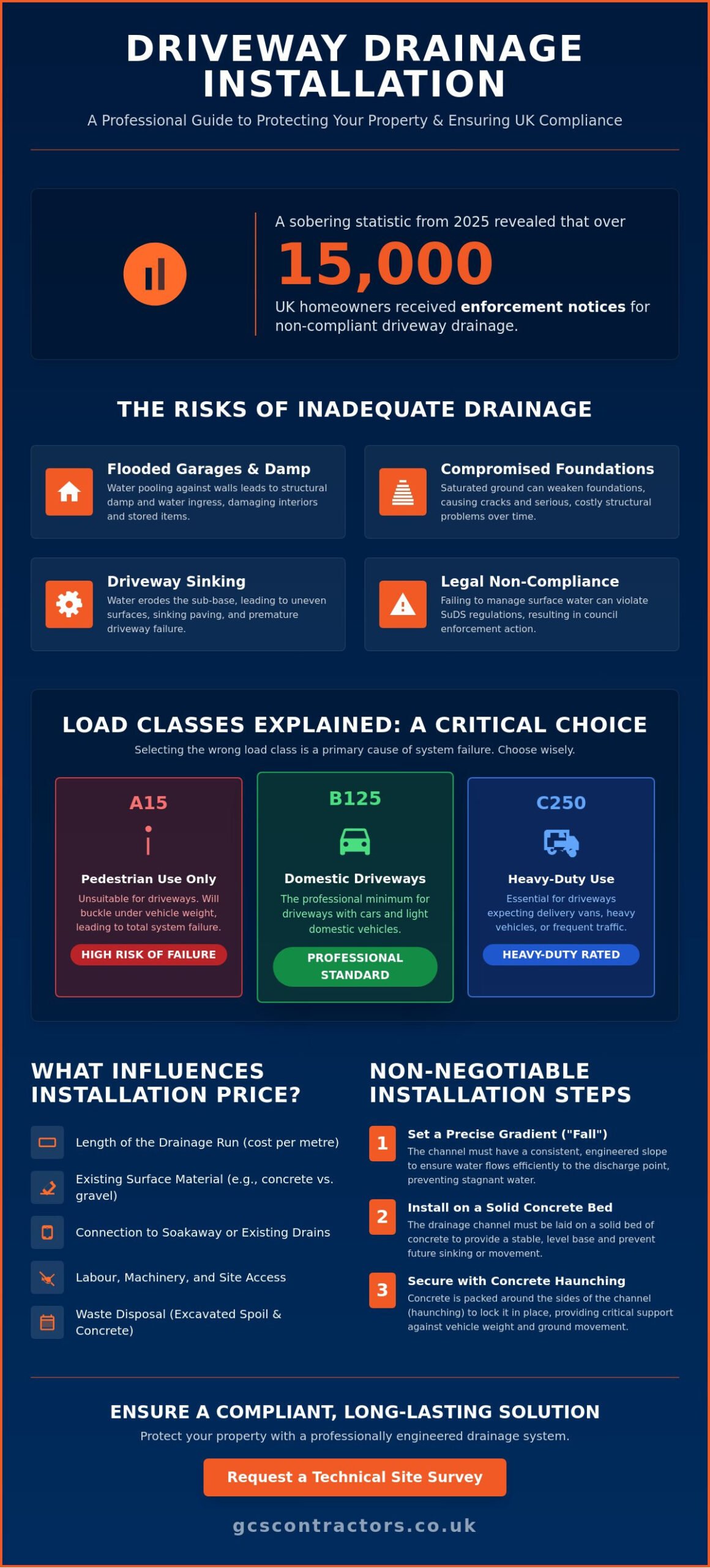
Did you know that over 15,000 UK homeowners received enforcement notices in 2025 for non-compliant driveway drainage? It’s a sobering statistic that highlights the risk of ignoring surface water management. Most property owners simply want a reliable, dry entrance to their home, yet many find themselves dealing with pooling water near the garage or the fear of their driveway sinking due to poor sub-base preparation. You shouldn’t have to guess whether your drainage meets legal requirements or if it’ll fail during the next heavy downpour.
Understanding the driveway drainage channel installation cost involves more than just looking at the price of basic components. This guide provides a professional breakdown of the technical factors, material grades, and labour requirements involved in a high-standard installation. We’ll explore the impact of the 2026 NHBC standards, the nuances of the latest SuDS regulations, and how to distinguish a professional-grade solution from a temporary fix. By the end, you’ll have the clarity needed to secure a reliable quote from a local groundworks specialist and protect your property for the long term.
Key Takeaways
- Understand why linear drainage is a critical structural safeguard for protecting your foundations and preventing damp in garages.
- Learn how variables like run length and surface material dictate the total driveway drainage channel installation cost for a professional project.
- Discover the engineering precision needed to set the correct “fall” or gradient to ensure surface water moves efficiently away from your property.
- Identify why concrete haunching and proper bedding are non-negotiable for preventing channel movement and long-term driveway sinking.
- Gain a clear understanding of 2026 SuDS regulations to ensure your installation remains fully compliant with current UK drainage laws.
What Is a Driveway Channel Drain and Why Is It Essential?
A Trench drain, or channel drain, is a linear drainage system engineered to intercept surface water before it causes damage. It’s a critical component for any non-permeable surface. These systems act as a barrier, collecting runoff and redirecting it to a soakaway or the main sewer. Without effective drainage, water pools against external walls. This leads to structural damp, compromised foundations, and flooded garages. It’s not just about convenience; it’s about protecting the structural integrity of your home.
Compliance is a significant driver of the driveway drainage channel installation cost. Current UK regulations, specifically Sustainable Drainage Systems (SuDS) rules, mandate that surface water must be managed within your property boundary. If your driveway exceeds five square metres, you’re legally required to ensure water doesn’t spill onto the public highway. This is a disciplined approach to flood management. Modern installations also offer aesthetic value. You can choose from various gratings, such as galvanised steel or cast iron, to complement your property’s exterior whilst maintaining high performance.
Common Types of Linear Drainage Systems
Selecting the right material is vital for durability and load-bearing capacity. Your choice will depend on the expected traffic and the desired architectural finish.
- Plastic (Polypropylene) channels: These are lightweight and cost-effective. They’re suitable for light domestic use, such as pedestrian areas or domestic car parking.
- Polymer concrete channels: These are professional-grade, high-strength options. They’re designed to withstand heavier vehicle loads and offer superior chemical resistance.
- Slot drains: These systems feature a discreet, narrow opening. They’re often favoured for modern architectural projects where a minimalist look is required without compromising on flow rates.
Itemised Costs: What Influences the Installation Price?
Calculating a realistic driveway drainage channel installation cost requires looking beyond the price of the units themselves. Every site presents unique challenges that dictate the final investment. The most obvious factor is the length of the run. Costs scale per metre as both material volume and excavation time increase. However, the existing surface material is often the most significant variable. Breaking through reinforced concrete or aged tarmac requires specialised diamond-tipped saws and additional labour hours compared to trenching through soft verges or loose gravel.
Your choice of discharge point also impacts the budget. Connecting to an existing drainage system is often more straightforward than constructing a new soakaway. Any new installation must comply with official government guidance regarding surface water management. If your property’s soil has poor permeability, you may need a larger, more complex soakaway system, which increases the scope of the groundworks.
Understanding Load Classes and Durability
Selecting an inappropriate load class is a common cause of system failure. Many off-the-shelf kits are A15 rated. These are designed for pedestrian traffic and frequently buckle under the weight of turning cars. For a standard domestic driveway, a B125 rating is the professional minimum. If you regularly have heavy vans or delivery vehicles on-site, a C250 rating is necessary. The price difference between a basic plastic grating and a heavy-duty ductile iron cover is a direct investment in the longevity of your driveway.
Labour and Machinery Requirements
Professional installation isn’t a manual task. Precise trenching for professional groundworks typically requires a mini-digger to ensure a consistent and accurate gradient. Beyond the machinery, waste disposal remains a major budget factor. Excavated spoil, especially old concrete or tarmac, must be removed via skip hire or grab lorries. These logistical costs are essential for a clean and compliant site. For an accurate assessment of your project, it’s best to request a technical site survey from a qualified drainage contractor.
Technical Considerations for a Long-Lasting Installation
Engineering precision is what separates a professional installation from a temporary fix. The most critical factor is the “fall” or gradient. A channel drain must have a consistent slope, typically a minimum of 1:80, to ensure surface water moves toward the discharge point. Without this precise drop, water stagnates in the channel, leading to silt build-up and eventual failure. This level of accuracy is a core component of the driveway drainage channel installation cost, as it requires skilled laser-levelling during the excavation phase.
Structural stability depends on concrete haunching. A professional installer won’t simply place the channel in a dirt trench. The units must be encased in a concrete bed and haunch, usually using a C20/25 strength mix. This encasement prevents the channel from shifting or “popping out” when vehicles drive over the grating. We also integrate silt traps at key intervals. These accessible catch pits intercept debris before it enters the main pipework, allowing for straightforward maintenance and preventing costly underground blockages.
Local environmental factors in East Anglia play a significant role in system design. Many areas around Cambridge sit on heavy Gault clay, which has poor natural infiltration rates. This soil type dictates the size and depth of any associated soakaways. If the ground can’t absorb water quickly enough, we must design larger attenuation systems to handle peak rainfall events whilst remaining compliant with Official UK Drainage Regulations (Approved Document H).
Connecting to the Main Network or Soakaway
UK law strictly prohibits the discharge of surface water into foul sewers. You must ensure your system connects to a dedicated surface water sewer or a private soakaway. Before any new soakaway is installed, a percolation test is essential to measure the soil’s drainage capacity. This data ensures the system is fit for purpose and won’t cause flooding in neighbouring properties.
Why Hire a Groundworks Specialist?
DIY drainage often fails because the channels collapse under the lateral pressure of turning vehicles. A groundworks specialist ensures the installation is robust and the final finish seamlessly integrates with your existing roadworks or paving. Professional contractors use industrial-grade materials and machinery to deliver a compliant, durable solution that protects your property investment for decades.
Secure Your Property with Professional Drainage Infrastructure
Managing surface water is a technical necessity that protects your property’s long-term value. Every project requires a disciplined approach to load class selection, compliance, and engineering precision. As we’ve explored, the driveway drainage channel installation cost represents a direct investment in structural safety and effective site water management. Success depends on ensuring precise gradients and robust concrete haunching to prevent system failure or driveway sinking.
GCS Contractors Ltd is a specialist in reinforced concrete and drainage infrastructure. We’ve served residential and commercial clients across Cambridge, Essex, and London for over 9 years. Our fully insured and accredited groundworks team delivers high-standard installations that meet the latest UK building regulations. Request a Professional Groundworks Quote from GCS Contractors Ltd to ensure your project is executed by experienced specialists who understand the complexities of local soil and civil engineering. Taking the right steps now ensures your driveway remains dry, compliant, and durable for decades to come.
Frequently Asked Questions
Do I need planning permission to install a driveway channel drain?
You don’t need planning permission if your drainage system redirects water to a permeable area within your property boundary, such as a soakaway or rain garden. However, if the driveway surface exceeds five square metres and water flows onto the public highway, planning permission is a legal requirement. This regulation ensures that private developments don’t contribute to local flooding or overwhelm the public sewer network.
Can I connect my driveway drainage directly into the public sewer?
You cannot connect driveway drainage to a foul water sewer under any circumstances. UK law requires surface water to be managed on-site where possible, typically through a soakaway. If a connection to a dedicated public surface water sewer is the only viable option, you must obtain formal consent from your local Water Authority. They will assess the impact on the network before granting approval for the connection.
What is the difference between A15 and B125 load classes?
The primary difference lies in the load-bearing capacity and intended application of the grating. A15 rated channels are designed for pedestrian traffic and light cycling, with a weight limit of 1.5 tonnes. B125 channels are engineered for domestic driveways and can withstand up to 12.5 tonnes. Choosing B125 is essential for any area where cars or delivery vans will regularly turn, as A15 covers often buckle under vehicle stress.
How long does it take to install 5 metres of channel drainage?
A professional installation of a 5-metre run typically takes one to two days to complete. This timeframe includes the precision excavation of the trench, setting the correct fall for water flow, and pouring the concrete haunching. If the project requires cutting through reinforced concrete or connecting to a distant soakaway, the labour time may increase. This time investment is a standard component of the driveway drainage channel installation cost.
How do I maintain my channel drain to prevent blockages?
You should clear the gratings of leaves and surface debris at least twice a year to ensure water can enter the system freely. Professional installations include silt traps or catch pits that intercept fine sediment before it enters the underground pipework. Lifting the grating to empty these traps and flushing the channel with water will maintain the correct gradient and prevent the build-up of stagnant water or silt.
What happens if my driveway drainage doesn’t meet SuDS requirements?
Non-compliant driveways can result in local authorities issuing an enforcement notice, requiring you to rectify the drainage at your own expense. Over 15,000 UK homeowners faced such notices in 2025 alone. Furthermore, a lack of SuDS compliance can cause significant delays during property surveys when you attempt to sell your home. Ensuring your driveway drainage channel installation cost covers a compliant design is vital for avoiding these legal and financial risks.
Need drainage work in Cambridge? GCS Contractors Ltd installs soakaways, attenuation tanks and foul & surface water drainage to Building Regulations Part H. See our drainage services in Cambridge or call 07500 570 926 for a free quote.