Professional Strip Out in Cambridge: A How-To Guide for Site Preparation
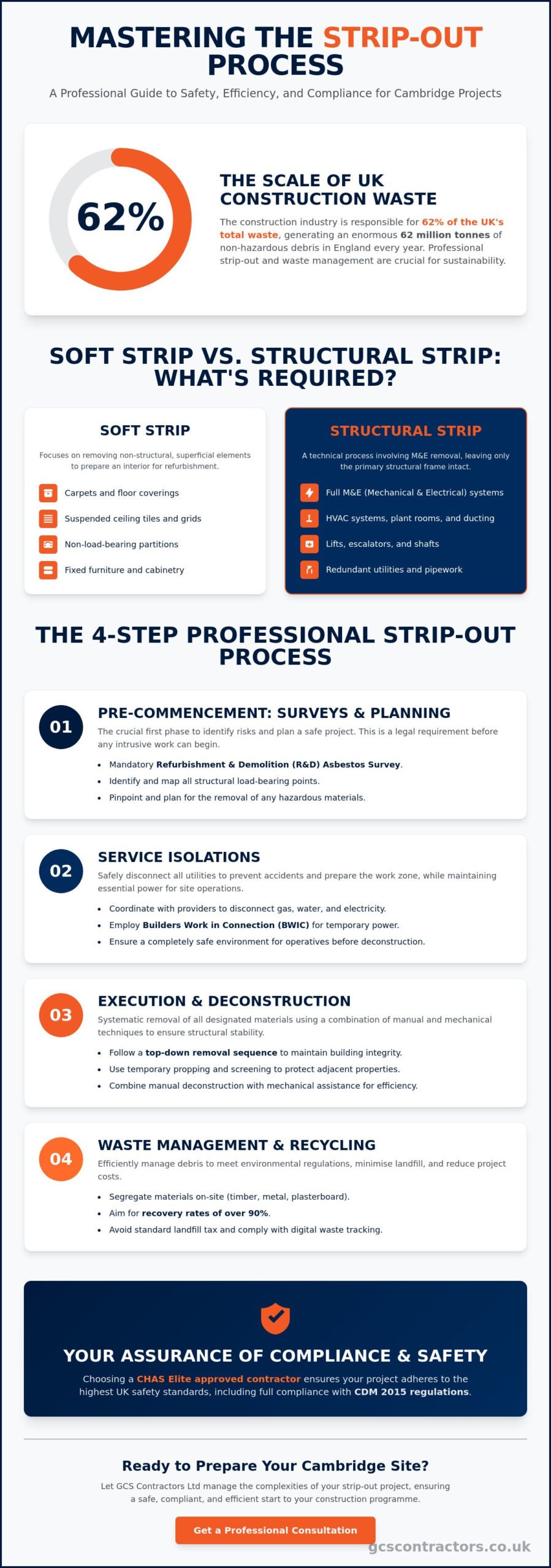
Did you know that the construction industry accounts for 62% of the UK’s total waste, generating over 62 million tonnes of non-hazardous debris in England every year? It’s a significant volume of material to manage, and it’s natural to feel concerned about distinguishing structural elements from removable fixtures whilst ensuring your Cambridge site remains compliant. A professional strip out is the critical bridge between an existing structure and successful groundworks, requiring precise enabling expertise to avoid the risk of structural damage or project delays.
It’s understandable to feel overwhelmed by the complexities of hazardous waste or the new mandatory digital waste tracking systems introduced in October 2026. This guide ensures you master every phase of the process, from initial surveys to efficient waste management, whilst maintaining full compliance with UK safety standards. We’ll preview the essential steps to prepare your site for the next phase of construction, focusing on how to coordinate your strip out with subsequent groundworks to keep your project moving forward with professional momentum.
Key Takeaways
- Distinguish between soft and structural phases to ensure the systematic removal of non-structural elements without compromising the building’s integrity.
- Identify how professional site surveys pinpoint hazardous materials and load-bearing points to mitigate risks before any physical work commences.
- Learn the critical steps for M&E removal and service isolations to safely disconnect utilities whilst maintaining essential power for your site team.
- Discover why choosing a CHAS Elite approved contractor for your Strip Out ensures full compliance with CDM 2015 regulations and UK safety standards.
- Understand the latest digital waste tracking requirements and environmental laws to manage debris effectively and meet local Cambridge recycling targets.
Defining the Strip Out Process: More Than Just Interior Removal
A professional strip out is the systematic process of removing non-structural components to prepare a building for refurbishment or demolition. It’s more than just clearing space; it’s about precision. The Strip Out Process involves selective dismantlement, which is a core component of any professional demolition service in Cambridge. By stripping back the interior, we expose the building’s skeleton. This allows our team to identify hidden structural defects, redundant services, or hazardous materials like asbestos before the main works begin. It’s a critical safety step that prevents costly surprises during the construction phase.
The Role of Enabling Works in Site Readiness
Enabling works are the preliminary activities that transform a site into a safe, accessible environment for heavy plant and machinery. A successful strip out is the first step in this sequence. It clears the path for geotechnical investigations, ensuring that soil conditions and foundations are correctly assessed. This preparation is vital for subsequent phases like bulk excavation. Without a clear site, your project risks hitting unforeseen obstacles that drain budgets and cause delays. We focus on creating a clean slate, ensuring that groundworkers can start their programme without navigating debris or redundant fixtures.
Soft Strip vs. Structural Strip: What Do You Need?
We categorise these works into two distinct phases to maintain site order. A soft strip focuses on non-essential, superficial elements. This includes removing:
- Carpets and floor coverings
- Suspended ceiling tiles and grids
- Non-load-bearing timber or metal stud partitions
- Fixed furniture and cabinetry
A structural strip is more technical and requires a higher level of engineering oversight. It involves comprehensive M&E removal, which includes HVAC systems, lift shafts, and heavy plant rooms. We ensure all services are isolated and removed without compromising the building’s stability, leaving only the primary structural frame intact for the next stage of the project. This disciplined approach ensures the site is compliant and ready for the next phase of development.
A Step-by-Step Guide to Executing a Safe and Efficient Strip Out
Planning a safe and efficient strip out requires more than just manpower. It starts with a comprehensive site survey to map out structural load-bearing points and hazardous materials. We prioritise the identification of asbestos through a mandatory Refurbishment and Demolition (R&D) survey. This is a legal requirement under the Control of Asbestos Regulations 2012 before any intrusive work begins on-site.
Pre-Commencement: Surveys and Isolations
Before any fixtures are removed, our team manages service isolations. This involves coordinating with utility providers to disconnect gas, water, and electricity (M&E). We often employ Builders Work in Connection (BWIC) for service diversions. This ensures the site remains powered for essential lighting and tools whilst keeping the work zone safe for the operatives. It’s a disciplined approach that prevents accidental strikes and keeps the programme on schedule.
Execution and Deconstruction Techniques
We follow a systematic top-down removal sequence. This maintains building stability and minimises dust migration. For larger commercial strip out projects in Cambridge, we combine manual deconstruction with mechanical assistance to improve efficiency. In central Cambridge, protecting shared party walls or historic features is paramount. We use temporary propping and protective screening to safeguard the structural integrity of neighbouring properties and maintain high standards of safety.
Effective waste management is the final step in the process. We segregate materials on-site, including timber, metal, and plasterboard. This is vital for achieving recovery rates of over 90% and avoiding the standard landfill tax rate of £130.75 per tonne. By organising waste into specific streams, we ensure your project remains cost-effective and environmentally compliant. For projects generating significant volumes of mixed debris, understanding your options for grab hire near me in Cambridge can dramatically reduce clearance costs compared to traditional skip hire. If you need a partner to manage these complexities, our team provides a trusted pair of hands for your Cambridge project.
Navigating Compliance, Waste, and Local Logistics in East England
Compliance isn’t optional in high-stakes construction. Choosing a contractor with CHAS Elite or ISO 9001 certification ensures your project aligns with CDM 2015 regulations from day one. We follow the HSE Demolition Safety Guidance to manage risks effectively. This authoritative framework governs how we handle every Strip Out project, ensuring safety from the first fixture removed to the final site clearance. It provides a safe pair of hands for developers who cannot afford regulatory delays or safety breaches.
Environmental Responsibility and Site Waste Management
We aim to divert 95% of waste from landfill through rigorous on-site segregation. This involves separating timber, metals, and inert materials at the source to maximise recycling potential. We prioritise concrete crushing and material reuse to keep project costs down and meet sustainability targets. Our work on the Darwin Green Cambridge project demonstrates how foundation integrity starts with smart material management. Reclaiming aggregates on-site reduces the need for virgin resources and lowers the carbon footprint of the entire build.
Logistics for Cambridge and the Surrounding Towns
East England presents unique logistical hurdles that national firms often overlook. Navigating the narrow, historic streets of central Cambridge or the restricted access areas of Ely requires meticulous traffic planning. We manage site clearance in bustling hubs like Peterborough, Bedford, and Stevenage by strictly controlling vehicle movements and delivery timings. We also adhere to local noise restrictions to minimise disruption to neighbouring residents and businesses. This local expertise ensures that the Strip Out phase doesn’t become a point of contention with the local council or the community.
The final handover is the bridge to the next stage of development. We provide a clean site, fully stripped and ready for groundworks in Cambridge. By finishing the enabling works to a high standard, we ensure the groundworkers can begin foundations or drainage installation without delay. From foundations to finishing, our disciplined approach keeps your project on track and within budget.
Preparing Your Site for the Next Phase of Construction
Executing a successful development requires a disciplined approach to site preparation. A professional Strip Out ensures that all non-structural components are removed safely, exposing potential issues before they become costly delays. By following a systematic top-down sequence and managing service isolations correctly, you maintain site stability and protect the integrity of the remaining structure.
Compliance remains the foundation of our work. As a CHAS Elite approved contractor with ISO 9001 and 14001 certifications, we ensure every project meets the highest safety and environmental standards. Our team understands the specific logistical challenges of East England, from the historic streets of Cambridge to the busy commercial zones of Peterborough. We handle the complexities of waste segregation and traffic management so you can focus on the next stage of development. In Cambridge’s challenging ground conditions, where Gault clay and fen silt demand specialist solutions, understanding your piling requirements for deep foundations in Cambridge before the strip out is complete can save significant time and cost during the foundation phase.
Ready to start your project? Contact GCS Contractors for a professional strip out consultation in Cambridge. We’re here to provide the expertise and reliability your site requires to move from foundations to finishing with confidence.
Frequently Asked Questions
What is the difference between a strip out and demolition?
A strip out involves the selective removal of internal, non-structural components to prepare a building for refurbishment or reconfiguration. Demolition refers to the complete removal of the building’s structural frame and foundations. Whilst a strip out preserves the external envelope, demolition clears the entire footprint to make way for new groundworks.
Do I need a permit for a building strip out in Cambridge?
You generally don’t need a specific permit for internal non-structural work, though you must adhere to CDM 2015 regulations. If your property is a listed building or situated within a Cambridge conservation area, you must consult the local planning authority before starting. It’s essential to verify heritage requirements with Cambridgeshire County Council to avoid legal complications.
How long does a typical commercial strip out take?
A typical commercial Strip Out for a 500 square metre office space usually takes between one and two weeks. Larger industrial units or sites requiring complex M&E removal can take up to four weeks or longer. These timelines depend on the volume of material and the efficiency of the authorised waste disposal programme.
Can a strip out be performed whilst the building is partially occupied?
Yes, we can complete a Strip Out in partially occupied buildings by implementing a phased project plan. We use physical barriers and dust suppression to segregate work zones from active office or retail spaces. This ensures the safety of occupants and minimises disruption to daily operations whilst the enabling works proceed.