A Professional Guide to Car Park Construction in Cambridge: From Groundworks to Surfacing
Up to 40% of commercial development delays in the East of England are caused by unforeseen ground conditions and complex drainage requirements. When you are planning a project for car park construction Cambridge, the region’s notorious Gault Clay and strict environmental regulations mean that a standard approach isn’t enough to guarantee longevity. You likely understand that a car park is a significant capital investment that must withstand heavy axle loads while meeting the rigorous planning criteria set out by local authorities.
Our team provides the technical expertise and disciplined management needed to ensure your infrastructure remains on schedule and fully compliant with UK safety standards. This guide delivers a comprehensive breakdown of the essential technical steps, from managing S278 highway works to implementing Sustainable Drainage Systems (SuDS) that effectively mitigate flood risks. You will gain a clear understanding of the construction timeline and the professional standards required to deliver a durable, high-quality finish that serves your business for decades. We explore the critical path from initial groundworks through to the final application of high-performance surfacing materials.
Key Takeaways
- Understand the vital role of GPR surveys and specialised groundworks in managing the unique challenges of Cambridge’s specific clay soil conditions.
- Compare the durability and maintenance requirements of asphalt, tarmac, and concrete to ensure your surfacing choice meets long-term commercial demands.
- Gain insight into the end-to-end technical standards required for successful car park construction Cambridge projects, ensuring full regulatory compliance and structural longevity.
- Learn how to integrate modern infrastructure, such as EV charging points and energy-efficient lighting, to future-proof your commercial site and enhance user safety.
- Discover how GCS Contractors delivers a “safe pair of hands” through transparent project management and fixed-price tenders for total financial certainty.
Understanding Car Park Construction in Cambridge: The Planning Phase
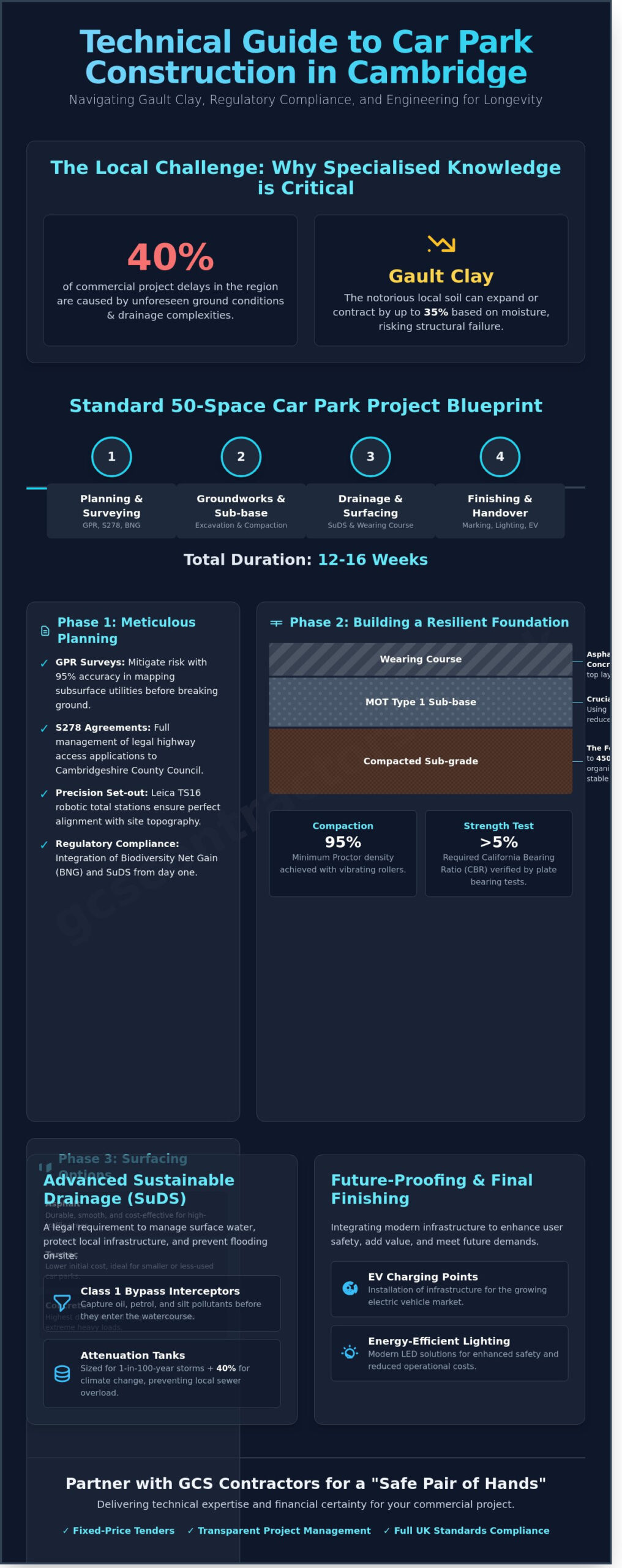
Commercial car park construction Cambridge is a sophisticated multi-stage civil engineering undertaking. It demands more than just a level surface; it requires a disciplined approach to groundworks, drainage, and structural integrity. At GCS Contractors, we treat every project as a bespoke infrastructure challenge. We begin with exhaustive site surveys to mitigate risk. Ground Penetrating Radar (GPR) is our primary tool here. It allows our engineers to map subsurface utilities and historical obstructions with 95% accuracy before a single bucket of earth is moved.
Navigating the 2018 Cambridge Local Plan requires a deep understanding of local environmental constraints. Most projects now require a formal Biodiversity Net Gain (BNG) assessment to ensure the development contributes to the local ecosystem. We also integrate Sustainable Drainage Systems (SuDS) into the initial design. These systems manage surface water runoff, which is a critical requirement for planning approval in the Cambridgeshire fens. A standard 50-space car park typically follows a 12 to 16-week project timeline. This programme accounts for every phase from enabling works to the final curing of the wearing course.
Site Enabling and Initial Clearance
Our team organises the safe strip-out and demolition of any existing structures or redundant surfacing. We use precision engineering techniques, including Leica TS16 robotic total stations, to set out the site boundaries and levels. This technical rigour ensures that the finished car park aligns perfectly with the site’s topography. We prioritise public safety by installing 2.4-metre timber hoarding or heavy-duty Heras fencing. This creates a secure perimeter that protects pedestrians and local traffic throughout the construction duration.
S278 Agreements for Highway Access
An S278 agreement is a legal requirement under the Highways Act 1980 whenever a project requires work on a public road. This is vital for creating new car park entrances or modifying existing kerbs. We manage the entire technical submission to Cambridgeshire County Council. This includes providing detailed traffic management plans to minimise disruption on busy routes like the A14 or A1134. Our team handles the legal and technical liaison, ensuring the new entrance meets the local authority’s strict safety and durability standards. We deliver a seamless transition from the public highway to your new private facility.
Groundworks and Drainage: Building a Sustainable Foundation
Successful car park construction Cambridge projects begin beneath the surface. Our team understands that the local geological profile, dominated by Gault Clay, presents specific engineering hurdles. This clay can expand or contract by up to 35% based on moisture content, making precise excavation vital. We remove topsoil and organic matter to reach the stable sub-grade, typically excavating to depths between 450mm and 600mm to ensure the structure can support heavy vehicle loads without shifting.
Once we establish the sub-grade, we install a high-quality sub-base using MOT Type 1 granular material. This layer acts as the primary load-bearing element of the car park. We source materials that meet rigorous UK standards to ensure longevity. Using inferior aggregates often results in a 25% reduction in the lifespan of the finished surface. We also integrate Sustainable Drainage Systems (SuDS) into every design. Under the Flood and Water Management Act 2010, managing surface water on-site is a legal requirement. Our SuDS solutions reduce the pressure on Cambridge’s local sewer networks by mimicking natural drainage patterns.
Advanced Drainage Solutions
Our team installs Class 1 bypass interceptors to capture oil, petrol, and silt before they reach the watercourse. This is a critical compliance measure for any commercial site. We also utilise attenuation tanks, often sized to handle 1-in-100-year storm events plus a 40% allowance for climate change. These systems store excess water during heavy rainfall, releasing it at a controlled rate into the main sewer network. This meticulous approach prevents site flooding and protects the surrounding infrastructure.
Sub-base Compaction and Testing
Precision during compaction is what separates a professional build from a DIY effort. We utilise vibrating rollers to achieve a minimum of 95% Proctor density, ensuring the foundation is rock-solid. To verify this, we conduct plate bearing tests to measure the California Bearing Ratio (CBR). A CBR value of at least 5% is usually required for car parks. If you skip these tests, you risk surface cracking and potholes within the first 24 months of operation. As a dedicated partner for groundworks, we provide full certification of these tests to give our clients total peace of mind. We don’t cut corners because we know that the integrity of the tarmac depends entirely on the stability of the ground beneath it.
Surfacing Options: Choosing Between Asphalt, Tarmac, and Concrete
Selecting the right finish is a critical decision in any car park construction Cambridge project. We evaluate each site based on expected traffic volume and load-bearing requirements to ensure the surface lasts. Concrete offers exceptional longevity, often exceeding 30 years, but it lacks the flexibility of bituminous materials and can be prone to cracking if the sub-base shifts. Tarmac provides a cost-effective solution for smaller private lots with lighter traffic. However, asphalt remains the industry standard for high-traffic commercial zones. Its ability to withstand heavy steering stresses and resist deformation under load makes it a superior long-term investment. We often recommend stone mastic asphalt (SMA) for its noise-reduction properties and enhanced durability.
Maintenance cycles vary significantly between materials. Asphalt typically requires a professional reseal every 5 to 7 years to prevent water ingress. For specialist zones, we apply high-friction, colour-coded coatings. These provide clear demarcation for EV charging points and disabled bays, ensuring 100% compliance with British Standards and the Equality Act 2010. Our team uses durable thermoplastic markings that stay vibrant for 3 to 5 years, even under heavy use. This systematic approach ensures your facility remains safe and accessible for all users.
The Tarmacing and Asphalt Process
Our team delivers a multi-layered approach to ensure structural integrity. We lay a heavy-duty binder course followed by a fine-graded surface course. Temperature control is vital; laying asphalt below 85°C leads to poor compaction and premature failure. We use 8-tonne vibrating rollers to achieve a smooth, void-free finish. This meticulous process eliminates trip hazards and ensures a professional aesthetic for your facility.
Permeable Paving and Sustainable Options
Modern car park construction Cambridge must address local flood risks and SuDS regulations. Permeable surfaces reduce the load on local drainage systems by up to 40% during heavy rainfall. Porous asphalt requires annual vacuum sweeping to prevent silt from clogging the matrix. While initial costs can be 15% higher, these systems often remove the need for expensive underground attenuation tanks, providing a sustainable, long-term solution.
Safety, Infrastructure, and Final Site Finishing
Once the primary surfacing is complete, we transition to the critical infrastructure that transforms a tarmac slab into a functional commercial asset. High-quality car park construction Cambridge requires a meticulous approach to the final fit-out, ensuring every element from lighting to drainage meets local planning conditions. We install high-output LED lighting systems that typically reduce energy consumption by 60% compared to legacy halogen units, providing clear visibility that’s essential for both safety and crime prevention.
Our team integrates CCTV systems compliant with BS EN 62676 standards to offer 24/7 security coverage. We don’t just place cameras; we strategically position them to eliminate blind spots near entry and exit points. This phase also includes the installation of robust drainage solutions and interceptors that prevent hydrocarbons from entering the local Cambridge water table, a vital requirement for environmental compliance.
Traffic Management and Pedestrian Safety
Designing logical traffic flow is a core component of our service. We implement one-way systems to minimise the risk of low-speed collisions, which the Association of British Insurers notes account for roughly 20% of all vehicle accidents. Our team applies high-visibility thermoplastic line markings that include 1.2-metre safety buffers for disabled bays, strictly adhering to BS 8300-1:2018 standards. We install heavy-duty steel bollards and concrete kerbing to protect pedestrian walkways and prevent structural damage to your buildings.
EV Charging Infrastructure Integration
Preparing for the future of transport is no longer optional. With the UK government targeting 300,000 public chargers by 2030, we ensure your car park construction Cambridge is future-proofed from the start. We install dedicated underground ducting and high-capacity cabling during the groundworks phase to support 7kW and 22kW charging points. By positioning these units within 15 metres of the main power distribution board, we often reduce initial installation costs by approximately 12% while ensuring maximum accessibility for electric vehicle users.
Final site finishing marks the conclusion of our physical presence on-site. We conduct a thorough sweep to remove all construction debris and surplus materials, leaving the area pristine. Our project managers perform a final walkthrough with the client to verify that every sign, bollard, and bay marking meets the agreed specification. We provide a comprehensive handover pack, including maintenance schedules and compliance certificates, ensuring you’re ready to open the facility immediately.
Ensure your project is handled by a safe pair of hands. Contact GCS Contractors for a professional site assessment.
Partnering with GCS Contractors for Your Cambridge Project
Choosing a reliable partner for car park construction Cambridge requires more than just comparing quotes. It’s about finding a team that understands the local landscape and the technical rigours of civil engineering. GCS Contractors brings over 12 years of experience to every project, positioning us as a safe pair of hands for commercial and public sector clients. We’ve built our reputation on a foundation of quiet confidence and tangible results, completing over 200 infrastructure projects across the region.
We eliminate financial uncertainty through our commitment to fixed-price tenders. Our transparent project management ensures you aren’t hit with the 15% budget creep often associated with poorly planned groundworks. You’ll receive a clear, itemised breakdown of costs before work begins. This professional rigour extends to our turnkey delivery model. We manage the entire lifecycle of the project, including:
- Initial site clearance and precise excavation
- Installation of complex drainage systems and SuDS compliance
- Sub-base preparation using high-quality primary aggregates
- Final surfacing and professional line marking
Safety is our primary metric for success. We maintain a 100% safety record by adhering strictly to CDM 2015 regulations. Every operative on our team holds a valid CSCS card, and our site supervisors are SSSTS or SMSTS qualified. We don’t just meet building standards; we aim to exceed them to ensure your site remains compliant and secure for years to come.
Our Professional Civil Engineering Approach
Our dedicated team delivers bespoke solutions for complex sites that others might find challenging. Cambridge’s unique soil conditions and strict planning requirements demand a meticulous approach to car park construction Cambridge. We focus on long-term durability, ensuring that the sub-layers we install can withstand heavy traffic loads without failing. This commitment to quality reduces your future maintenance costs by up to 30% over the life of the asset.
We believe in building relationships through performance rather than promises. If you’re planning a new facility or a major refurbishment, our team is ready to help. Contact GCS Contractors today for a detailed site assessment. We’ll provide a comprehensive technical proposal and a fixed-price quote within 48 hours of our visit, giving you the clarity needed to move your project forward with total confidence.
Secure Your Cambridge Infrastructure Project
Building a durable car park requires a meticulous approach to groundworks and sustainable drainage systems that align with local planning regulations. The longevity of your site depends on selecting the correct surfacing materials, such as high-grade asphalt or reinforced concrete, to withstand specific traffic loads. Our team delivers comprehensive end-to-end solutions that manage every phase from initial site clearance to the final installation of safety infrastructure. With over 10 years of industry experience, GCS Contractors provides the technical rigor needed for complex car park construction Cambridge projects. We are accredited groundworks and civil engineering experts specialising in S278 highways works, ensuring your project meets all legal compliance standards. We’ve built our reputation on being a safe pair of hands, delivering tangible results that stand the test of time while removing the logistical burden from your shoulders. Discuss your car park construction project with GCS Contractors today and let’s start planning a facility that serves your business for decades.
Frequently Asked Questions
How long does it take to construct a commercial car park?
A standard 30-space commercial project typically takes 4 to 6 weeks to complete. Larger sites with 100 spaces or more require a 10-week programme to account for complex drainage and surfacing. Our team delivers a structured timeline to ensure your car park construction Cambridge project stays on schedule. We manage every phase from initial excavation to the final line markings.
Do I need planning permission for a new car park in Cambridge?
You generally need planning permission from Cambridge City Council for any new car park development. Under the General Permitted Development Order, surfacing over 5 square metres requires approval if you aren’t using porous materials. We help clients navigate these 2015 regulations to ensure full compliance. Our experts provide the technical drawings needed for a seamless application process.
What is the most durable surfacing material for heavy vehicle use?
Stone Mastic Asphalt (SMA) provides the highest level of durability for sites handling heavy vehicle traffic. This material uses a high stone content and polymer-modified bitumen to resist rutting from 44-tonne HGVs. It’s a high-quality solution that offers a service life of 20 years or more. We recommend SMA for distribution centres and busy retail hubs across Cambridgeshire.
How much does car park construction cost per square metre?
The average cost for professional car park construction Cambridge ranges from £65 to £110 per square metre. For a mid-sized 500 square metre car park, you should budget approximately £45,000 for a complete turnkey solution. This figure includes groundworks, drainage, and high-quality surfacing. Prices fluctuate based on the specific sub-base requirements and the complexity of the SuDS installation.
What are SuDS and why are they required for car parks?
Sustainable Drainage Systems (SuDS) are mandatory water management features designed to mimic natural drainage. Since April 2015, UK planning policy requires SuDS to prevent local sewer systems from overflowing during heavy rain. We install permeable surfaces or attenuation crates that hold 1,000 litres of water or more. These systems ensure your site remains safe and compliant with environmental standards.
Can you install EV charging points during the construction phase?
We can and should install electric vehicle (EV) charging infrastructure during the initial groundworks phase. Building Regulations Part S now requires one charge point for every 10 parking spaces in new non-residential buildings. By laying the ducting and cables early, we reduce your installation costs by 25% compared to retrofitting later. It’s a dedicated part of our end-to-end service.
What is the difference between tarmac and asphalt for car parks?
The primary difference lies in the binder material used to hold the aggregate together. Tarmac utilises tar, while modern asphalt uses bitumen, making it more resistant to temperature changes. Asphalt is a denser material that typically lasts 15 to 20 years under heavy use. Most commercial clients choose bitumen macadam for its balance of cost-effectiveness and long-term reliability.
How do you handle construction on sites with poor ground conditions?
We manage poor ground conditions by using advanced soil stabilisation techniques and heavy-duty geotextile membranes. If a site has a California Bearing Ratio (CBR) of less than 3%, we often introduce lime or cement to strengthen the subgrade. This process saves money because we don’t need to remove 500 tonnes of soil from the site. It ensures a stable foundation for the final surfacing.