Builders Work in Connection (BWIC) Explained: Your Comprehensive Guide
What is BWIC? Quick answer: Builders’ Work in Connection (BWIC) is the general building work needed to support the installation of mechanical and electrical (M&E) services — cutting holes and openings, chasing walls, forming ducts, building plinths and equipment bases, fire-stopping and making good afterwards. It is usually priced as a provisional sum, commonly around 1–3% of the M&E contract value, and coordinated between the main contractor and M&E subcontractors.
Need BWIC carried out on a Cambridge project? See our services or call 07500 570 926.
What if the success of your construction project hinges on an often-overlooked aspect? Builders work in connection (BWIC) explained is crucial for anyone involved in the construction industry, yet many remain confused about its scope and responsibilities. You’re not alone if you’ve felt uncertain about how BWIC integrates with other services or if you’ve struggled to find clear examples of its applications. In this comprehensive guide, you will gain a solid understanding of what BWIC entails and its significant impact on construction timelines and costs. We’ll also provide practical insights on how to effectively incorporate BWIC into your projects, ensuring you can navigate this essential area with confidence. Get ready to demystify BWIC and elevate your project management skills.
Key Takeaways
- Discover the fundamental aspects of builders work in connection (BWIC) explained, ensuring you grasp its significance in construction projects.
- Learn about the critical steps in the BWIC process and the roles of various stakeholders to streamline your project planning.
- Identify common challenges in BWIC and explore effective solutions to mitigate risks and enhance project outcomes.
- Examine real-world BWIC applications to understand best practices and lessons learned that can be applied to your projects.
What is Builders Work in Connection (BWIC)?
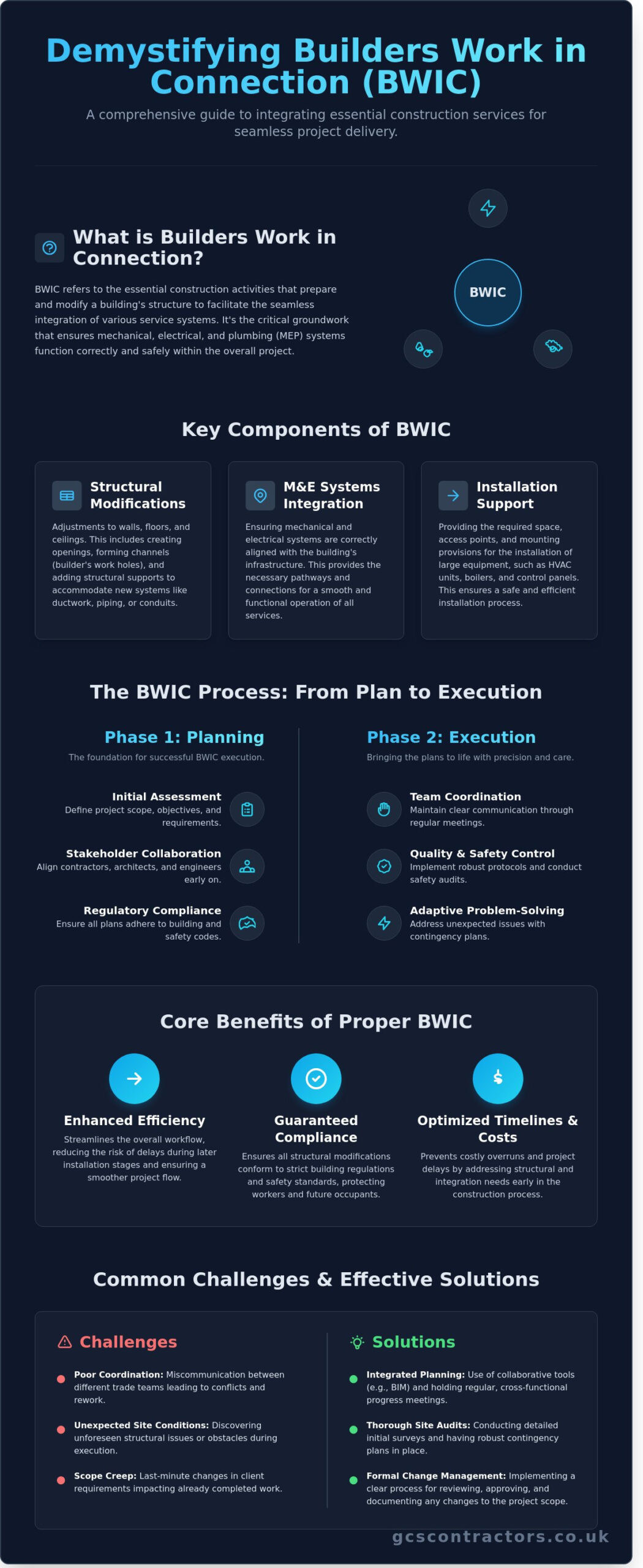
Builders Work in Connection (BWIC) refers to the essential construction activities that facilitate the integration of various systems within a building project. These works are crucial in enhancing the overall functionality and safety of structures, ensuring that all mechanical, electrical, and plumbing systems operate seamlessly. Understanding BWIC is vital for anyone involved in construction, as it lays the groundwork for subsequent installations and modifications.
Components of BWIC
BWIC encompasses a range of works, including:
- Structural Modifications: This includes adjustments to walls, floors, and ceilings to accommodate installations such as ductwork, piping, or electrical conduits.
- Integration with Mechanical and Electrical Systems: BWIC ensures that these systems are correctly aligned with the building’s infrastructure, facilitating smooth operations.
- Support for Installation Processes: It provides necessary space and access for the installation of services like heating, ventilation, and air conditioning (HVAC) systems.
These components collectively create a framework that allows for efficient service integration, making BWIC a critical element of the construction process.
Importance of BWIC in Construction
The significance of BWIC in construction cannot be overstated. First, it enhances project efficiency by streamlining the workflow. When BWIC is executed correctly, it reduces the risk of delays associated with later-stage installations. Compliance with building regulations is another crucial aspect; BWIC ensures that all modifications conform to safety standards, which protects both workers and future occupants.
In terms of project timelines, effective BWIC can prevent costly overruns. By addressing structural needs early in the construction process, projects can maintain momentum and meet deadlines more reliably. In summary, builders work in connection (BWIC) explained serves as a cornerstone for successful construction projects, reinforcing the importance of meticulous planning and execution.
The BWIC Process: Steps Involved
Understanding the builders work in connection (BWIC) explained involves delving into the structured process that underpins effective project execution. This process is vital for ensuring that all stakeholders are aligned and that the project runs smoothly from inception to completion. Below, we outline the key steps, the roles of various stakeholders, the importance of early planning, and common challenges faced during the BWIC process.
Planning for BWIC
Initial assessments and project briefings form the cornerstone of effective BWIC planning. Stakeholders, including contractors, architects, and engineers, must come together to define the project’s scope and objectives. Early collaboration among contractors is essential; it fosters a unified approach to project delivery and reduces potential conflicts later in the execution phase.
Regulatory compliance should be a priority from the outset. Familiarity with local building regulations and health and safety standards ensures that all works meet the necessary legal requirements, thus avoiding costly delays and fines. For instance, adhering to the Building Regulations 2010 can save time and resources, allowing projects to stay on track.
Execution of BWIC
During the execution phase, coordination is critical. Each team member must understand their responsibilities and how their work impacts others. Regular communication between teams is vital; it prevents misunderstandings and facilitates quick resolutions to any issues that arise. Weekly progress meetings can help maintain transparency and keep all parties informed.
Quality control and safety measures cannot be overlooked. Implementing robust safety protocols protects workers and ensures that the project adheres to industry standards. For example, conducting safety audits can identify potential risks before they become problematic, enhancing overall project integrity.
Despite careful planning and execution, common challenges can still arise. These may include unexpected site conditions, supply chain delays, or changes in client requirements. Addressing these issues promptly and effectively is crucial to prevent disruptions. Having contingency plans in place allows teams to adapt swiftly to changing circumstances, ensuring that the project remains on schedule.
In conclusion, successful BWIC execution relies on meticulous planning, seamless communication, and a proactive approach to problem-solving. By understanding the intricacies involved in the BWIC process, stakeholders can enhance their collaborative efforts and ultimately deliver high-quality results. For more insights on how we can assist you with your next project, feel free to explore our services.
Common Challenges and Solutions in BWIC
Builders work in connection (BWIC) explained encompasses various complexities that can arise during construction projects. Understanding the common challenges, their implications, and effective solutions is crucial for ensuring project success. Below are some frequent issues encountered in BWIC projects and strategies to address them.
Addressing Coordination Issues
Coordination among teams is often a significant challenge in BWIC projects. Poor communication can lead to misunderstandings, delays, and increased costs. To improve team communication, establish clear channels of information sharing. Regular updates and meetings can facilitate discussions and ensure everyone is aligned. For instance, using project management tools like Trello or Asana can streamline task assignment and progress tracking.
Incorporating weekly check-ins can enhance transparency, allowing teams to address issues promptly. Encourage a culture of open dialogue where team members feel comfortable sharing concerns. This proactive approach can significantly reduce the risk of miscommunication.
Ensuring Compliance and Quality
Adherence to building standards is non-negotiable in BWIC projects. Failing to comply can result in costly reworks or legal implications. Regular inspections and assessments should be integrated into the project timeline to ensure compliance with regulations set by bodies like the Building Regulations 2010 in the UK.
To maintain high-quality workmanship, it is essential to establish clear quality benchmarks from the outset. Implementing a robust quality control process, which includes site audits and staff training, can help uphold standards. Encourage subcontractors to adhere to these benchmarks to ensure consistency across all aspects of the project.
Thorough documentation and reporting are key to overcoming challenges in BWIC. Keeping detailed records of communications, decisions, and changes not only ensures accountability but also provides a reference for future projects. This practice fosters a culture of transparency and can be invaluable for resolving potential disputes. Our team at GCS Contractors prioritises meticulous documentation to guarantee that all stakeholders are informed and aligned throughout the construction journey.
By addressing coordination issues and ensuring compliance and quality, BWIC projects can be executed more effectively. Implementing these solutions not only mitigates risks but also enhances the overall efficiency and success of the project.
Real-World Applications of BWIC
The concept of builders work in connection (BWIC) explained can be illustrated through successful real-world applications across various construction projects. These examples not only highlight the effectiveness of BWIC but also provide valuable insights into the challenges and solutions encountered during implementation.
Case Study 1: Commercial Development
In a recent commercial development project in London, the BWIC components included the coordination of electrical, plumbing, and HVAC systems. The project required meticulous planning and execution, as the building was situated in a densely populated area with limited access. The successful implementation of BWIC facilitated the seamless integration of these systems, leading to enhanced operational efficiency.
Outcomes included a 20% reduction in project delivery time and significant cost savings due to decreased rework. However, challenges such as unexpected site conditions arose, which the project team overcame by employing agile project management techniques and maintaining open communication among all stakeholders. This case underscores the importance of flexibility and collaboration in BWIC applications.
Case Study 2: Residential Project
For a residential project in Manchester, the BWIC considerations revolved around ensuring minimal disruption to the surrounding community. Key aspects included the careful scheduling of work to avoid peak traffic hours and the use of noise-reducing construction methods. These tailored BWIC solutions resulted in a project completion that was two weeks ahead of schedule.
Client satisfaction soared, with feedback indicating a 95% approval rating for the project’s impact on their daily lives. The effective management of BWIC not only expedited the timeline but also fostered a positive relationship with the local residents, showcasing the significance of bespoke solutions in residential builds.
Overall, these case studies demonstrate that builders work in connection (BWIC) explained is crucial in overcoming challenges in both commercial and residential environments. The tailored approaches applied in these projects highlight the necessity of custom solutions to meet specific project needs. For additional insights on implementing BWIC in your next project, contact GCS Contractors.
Conclusion: The Strategic Importance of BWIC
In summary, understanding builders work in connection (BWIC) is essential for anyone involved in construction projects. BWIC facilitates seamless integration of various trades, which is crucial for maintaining project timelines and budgets. By ensuring that all aspects of the build process are closely coordinated, BWIC helps mitigate risks and enhances overall project efficiency.
The role of BWIC extends beyond mere logistics; it is pivotal in guaranteeing project success. Effective communication and collaboration among contractors, suppliers, and clients can lead to significant improvements in quality and safety standards. For example, projects that actively implement BWIC strategies have reported a reduction in delays by up to 30%, showcasing its effectiveness in delivering on time and within budget.
Proactive Planning and Integration
To leverage the advantages of BWIC, proactive planning is vital. Engaging all stakeholders early in the project lifecycle allows for better alignment of goals and expectations. This not only fosters a collaborative environment but also ensures that potential challenges are identified and addressed before they escalate. For future projects, integrating BWIC from the outset can streamline processes, reduce waste, and ultimately contribute to a more sustainable approach to construction.
As the construction industry continues to evolve, the importance of BWIC cannot be overstated. With increasing regulations and the need for higher standards of safety and quality, adopting a robust BWIC framework will position companies favourably in a competitive market. By establishing clear protocols and communication channels, businesses can enhance their operational efficiency and client satisfaction.
In conclusion, builders work in connection (BWIC) explained encompasses not just a methodology but a strategic approach to improving construction outcomes. We encourage all stakeholders to consider BWIC as a fundamental component of their project planning and execution strategies.
For further insights into related construction topics, explore our articles on Groundworks Contractors in Cambridge and S278 Highways Works Contractors UK. Making informed decisions today can lead to successful projects tomorrow.
Moving Forward with BWIC
The strategic importance of builders work in connection (BWIC) explained cannot be overstated. This essential process facilitates seamless collaboration between various contractors, ensuring efficient project delivery. Understanding the BWIC process helps to navigate common challenges, ultimately leading to successful outcomes. With a proven track record in executing BWIC projects, GCS Contractors stands ready to support your needs.
If you’re looking for a reliable partner with expertise in groundworks and civil engineering, look no further. Our commitment to safety and quality standards ensures that your project will be handled with the utmost care and professionalism. Contact GCS Contractors today to discuss your BWIC needs!
Let’s build a safer, more efficient future together.
Frequently Asked Questions
What types of works are included in Builders Work in Connection?
Builders Work in Connection (BWIC) encompasses various tasks that facilitate integration between different construction disciplines. This includes structural alterations, openings for services, and modifications to existing facilities. Typical works might involve creating openings for electrical, plumbing, and HVAC systems, ensuring that different trades can execute their roles efficiently and safely.
How does BWIC affect project timelines?
BWIC can significantly impact project timelines, often leading to delays if not properly managed. When BWIC activities are scheduled alongside other trades, careful planning is essential to prevent bottlenecks. For example, if a structural opening is delayed, subsequent work such as electrical installations may also be pushed back, affecting overall project completion.
Why is planning essential for BWIC?
Effective planning is crucial for BWIC to ensure seamless integration of various construction elements. A well-structured plan helps identify potential conflicts and scheduling issues ahead of time. For instance, coordinating the timing of BWIC with other trades can prevent costly rework and ensure that all components are in place for timely project execution.
What are the challenges faced during BWIC execution?
Challenges during BWIC execution can include coordinating multiple trades, managing unexpected structural issues, and adhering to safety regulations. For example, if an unforeseen structural element is discovered during BWIC, it can halt progress and require additional resources to resolve. Such delays can lead to increased costs and extended project durations.
How can effective communication improve BWIC outcomes?
Effective communication among all stakeholders enhances BWIC outcomes by ensuring everyone is aligned on project goals and timelines. Regular updates and discussions help identify issues early, allowing for quicker resolutions. For instance, if a contractor notices a potential conflict between services, prompt communication can facilitate adjustments that prevent delays.
What role does BWIC play in compliance with building regulations?
BWIC is integral to ensuring compliance with building regulations, as it often involves structural changes that must meet specific standards. For instance, any alterations made to load-bearing walls must comply with local building codes to ensure safety. Adhering to these regulations during BWIC can prevent legal issues and ensure the project passes inspections without complications.
Can you provide examples of BWIC in real projects?
One example of BWIC in action is the refurbishment of commercial office spaces, where openings for new electrical and data cabling are created in existing walls. Another instance is during the construction of residential complexes, where structural modifications allow for the installation of larger windows or doors. These examples highlight how BWIC facilitates the integration of modern systems within the built environment.